
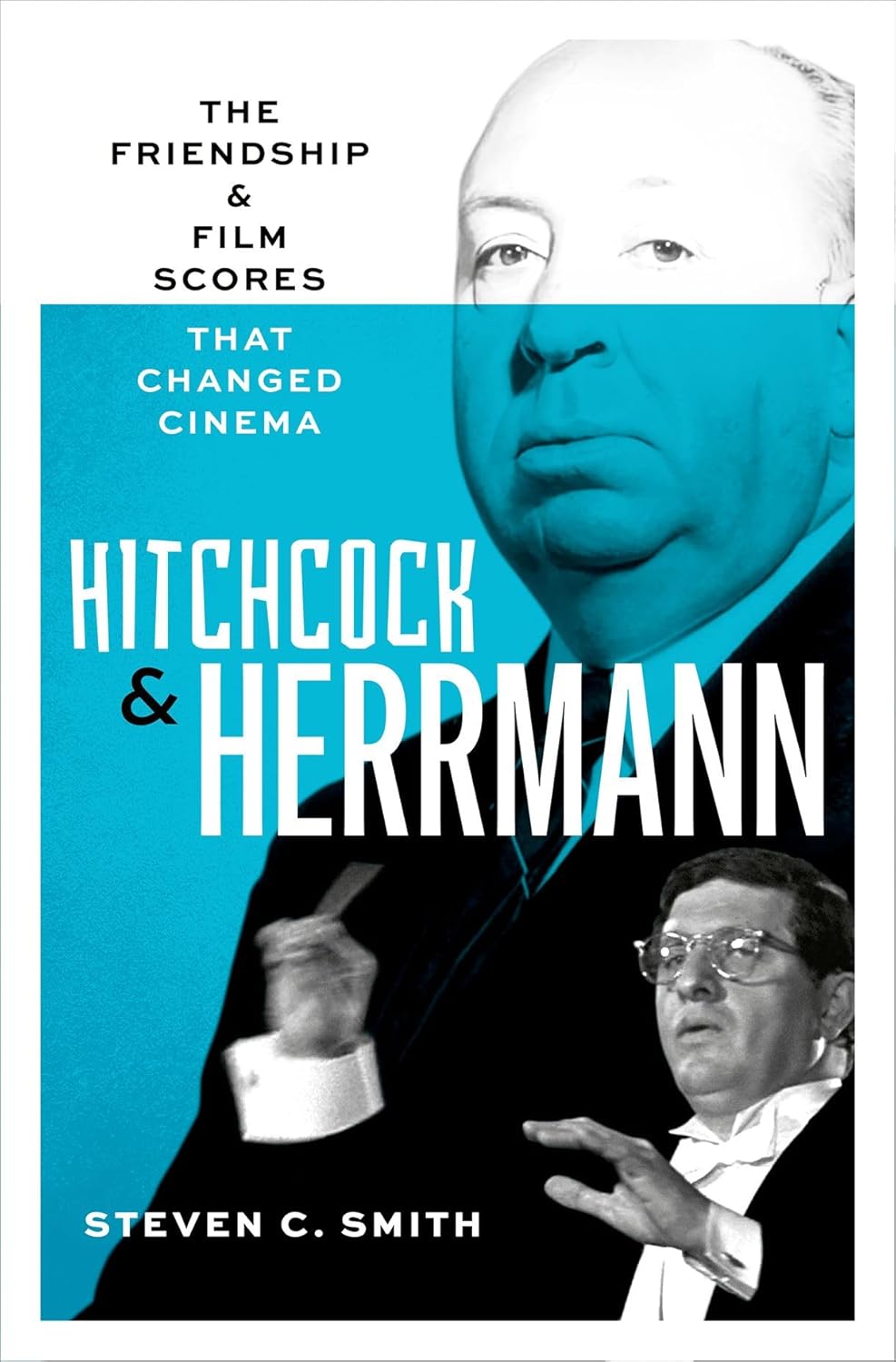
Hitchcock and Herrmann: The Friendship and Film Scores That Changed Cinema
Published by Oxford University Press, 2025. 295 pages
By Steven C. Smith
I had purchased Smith’s previous book, on composer Max Steiner, so when this new one was coming out, I pre-ordered it. Not only because I knew it was going to be interesting with the subject matter being the work that Hitchcock and composer Bernard Herrmann did, but I just love learning more about the making of the films. Learning about the making of the music for these films was something new and made me very curious to dig into. Especially since I have not one bit of musical talent myself, would I be able to understand what the author was describing? While there are parts where Smith delves into the actual music, for a layman like me, it was still very comprehensible and not overpowering where you lose interests.
The book opens with Herrmann conducting the score for Martin Scorsese’s Taxi Driver (1976), which would be his last score. It shows just how much influence his scores had been to this new generation of directors, such as Scorsese, Brian De Palma, and even modern composers like John Williams. And while Herrmann started his film score career with Orson Welles’ Citizen Kane (1941), it really was his work with Alfred Hitchcock that gave him his fame. Even with his last scores, it showed Herrmann’s temperament and attitude, but also his ethics, style, and just sheer talent.
Let’s face it. Herrmann was not a nice person some of the time. But I feel what author Smith shows here is what Herrmann was seeing and “hearing” when he was watching a film that he was to compose music for; he saw something that most others did not. It is something that he did frequently with Hitchcock, as well as other directors, doing what he thought was best for the picture. A lot of times, he was right, though that is a sure way to irritate directors and producers when you don’t do what they want. And that is probably the biggest obstacle Herrmann created with people wanting to work with him.
Smith does an incredible job going back and forth between Herrmann’s and Hitchcock’s life and careers, where they were at the same time, how it came together for them to create some of their best work together, and then, sadly, how it all fell apart. And that last section, really is heartbreaking. For a director and composer to have such trust and admiration with each other to allow them to do what they each felt was best is a rarity. Maybe it was because Hitchcock didn’t like confrontation and would just let Herrmann do what he wanted, but if that was the case, then Hitchcock wouldn’t have turned other composers, or even screenwriters, away when they turned in something he didn’t like.
Because of the film Psycho, as well as Hitchcock’s other thrillers, Herrmann was sort of “typecast” as it were, of only being thought of to be able to do thrillers and such. Smith used a term that I just loved and completely intend to quote for the rest of my days! He wrote “success had a shadow”, and I think that perfectly sums up what some people in the industry don’t realize, even after all these years. It affected both Hitchcock and Herrmann. Though Hitchcock was powerful enough to still do what he wanted to, Herrmann was not. Adding to his explosive temperament, it made getting work in the later part of his life more difficult.
Even if you’re not musically inclined, such as I am, if you are a fan of film scores, then this is a must read. I learned so much about not only Herrmann, but Hitchcock as well, and seeing and hearing things in the films that I had not noticed before. It’s a wonderful way to experience a film in a new light, even if it is one that you’ve watched multiple times. When a book can do that, improving your own viewing experience, that is a great book. This is one of those.

