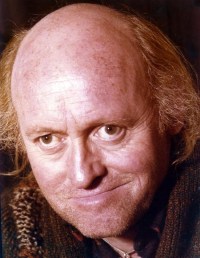
Horror History: Victor Israel

victorisraelVictor Israel
Born June 13th, 1929 – Died Sept. 19th, 2009

If you’ve watched any Spanish horror films of the ’70s, then I’m pretty sure you’ve seen Victor Israel before. This guy is like the Spanish version of England’s Michael Ripper. Making well over 150 films, he usually was cast as little bit parts, but was always so recognizable, that it would always make you think “hey…I’ve seen that guy before”. He played in several different genres, like appearing alongside Lee Van Cleef in Sergio Leone’s The Good, The Bad, and The Ugly (1966). Of course, for us, it was the countless horror movies that he appeared in that had us remembering that face of his. With his pudgy appearance, balding, and strange eyes, he was always easy to spot. It is actors like this, that never make it as a top-billing star, but are the ones that fill out the colorful pallet of the movie, making it so much more interesting to watch. I know that is definitely the case for me when it comes to horror films.

Some of his most noteworthy appearances were in films like The House that Screamed (1969), Graveyard of Horror (1971), Paul Naschy’s Night of the Howling Beast (1975), and of course as the baggage clerk in Horror Express (1972). He even appeared in Bruno Mattei’s Hell of the Living Dead (1980).
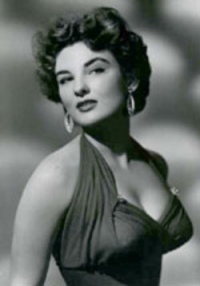
Horror History: Allison Hayes

allisonhayes2Allison Hayes
Born March 6th, 1930 – Died Feb. 27th, 1977

Allison Hayes appeared on quite a few television shows and movies, mainly B-movies, in her short career, but never seemed be able to break into the big time. But because of the films that she did make, cult horror fans have always remembered here. With films like Roger Corman’s The Undead (1957) or The Hypnotic Eye (1960), or probably her most famous, Attack of the 50-Foot Woman (1958), she has made a definitely impact on the horror genre. One that will never be forgotten.

Unfortunately, her life was much more dramatic than the movies she appeared in. The last decade of her life, she was battling severe health issues, even having to walk with a cane. The pain was so bad, there were times that she had even thought of taking her own life. It didn’t help that the doctors didn’t seem to take her symptoms seriously. But after some of her own research, she discovered that the calcium supplements that she had been taken for some time, contained high levels of lead, which was causing her to suffer from lead poisoning. She was later diagnosed with leukemia. But before passing away, she had mounted a campaign to have the FDA ban the import and sale of this supplement that she had been taking, and eventually won in 1976. There are many reasons to remember Allison Hayes. So please do.

Horror History: Larry Buchanan

larrybuchananLarry Buchanan
Born Jan. 31st, 1923 – Died Dec. 2nd, 2004

Buchanan holds a special place in my heart. Not the greatest filmmaker out there, or even close. But there is just something special about him and his films that hold my admiration. Many people thing that Roger Corman is king of the low budget filmmaking, but they have never heard of Buchanan. He was based in Texas and was making films at a fraction of the cost Corman was getting. And while his films may not have been “good” films, they usually turned a profit, so that means he really was a successful filmmaker. One of his first films, The Naked Witch (1961) was made for only $8,000 and made $80,000 the first month it was release. Not a bad investment.

He was hired by AIP to direct some remakes of four of their movies for the growing TV market. Again, with a considerable lower budget and only one name actor, he cranked them out in no time flat. Lucky for fans like me, a good number of his films are available on DVD, and one of them usually finds its way in my annual Turkey-Day marathon. As we said, they might not be good films, but they are entertaining.

Here are some of Buchanan’s titles to seek out: The Eye Creatures (1965), Zontar: The Thing from Venus (1966), Curse of the Swamp Creature (1966), Mars Needs Women (1967), Creature of Destruction (1967), plus many more. It may take a couple of viewings to really understand this guy, but if you are a fan of low budget drive-in style films, then you might find some enjoyment out of these.

Horror History: John Brahm

johnbrahmJohn Brahm
Born Aug. 17th, 1892 – Died Oct. 12th, 1982
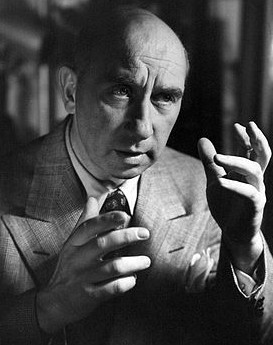
Beginning his career on the stage, just like his father before him, Brahm later move into film production, before moving to England in 1934 because of the rise of the Nazis. Working briefly as a production supervisor, he made his directorial debut with a remake of D.W. Griffith’s Broken Blossoms. The next year, he moved to the U.S. Over the next few years, working with first Columbia and then 20th Century Fox, where he seemed to specialize in dark thrillers. While he only made four films that could be considered in the horror genre, they were all exceptional.
The first was The Undying Monster (1942) which was hybrid of a murder mystery and monster-on-the-loose, but was filmed with tons of atmosphere. But his next one, The Lodger (1944), a remake of the Hitchcock film, is still to this day one of the best Jack the Ripper movies ever made. Because of the success of that film, he made Hangover Square, which has a very similar theme to The Lodger but is also an exceptional film. He later directed Vincent Price in The Mad Magician (1954), eventually doing a lot of work on television, like directing ten episodes of Alfred Hitchcock Presents, five episodes of Alfred Hitchcock Hour and twelve episodes each of Twilight Zone and Thriller. So while he might not have directed a lot of films in the genre, what he did do, he did quite well.

Horror History: Ronald Stein

ronaldstein.jpgRonald Stein
Born Apr. 12th, 1930 – Died Aug. 15th, 1988

He started his musical career writing scores in college, working with different opera houses and orchestras in throughout the early ’50s. It was in the mid ’50s that he started working for American International Pictures (known then as American Releasing Company). His first film was the Roger Corman directed western Apache Woman (1955). He worked for them for many years, scoring classic horror and sci-fi films like It Conquered the World (1956), The She-Creature (1956), Attack of the Crab Monsters (1957), Invasion of the Saucer Men (1957), Dementia 13 (1963), and many more. He even composed the theme song for Jack Hill’s Spider Baby (1968) with Lon Chaney singing, as well as the rest of the score for the film.

Stein was obviously a perfect match for AIP since he worked fast and cheap. Between the years of 1956 and 1958, he scored 8 films each year. Not a lot of time when you think about the way it is done these days. Thankfully quite a few of his scores are still available today on CD and are really fun to listen to.

Horror History: Jimmy Sangster

sangster1Jimmy Sangster
Born Dec. 2nd, 1927 – Died Aug. 19th, 2011

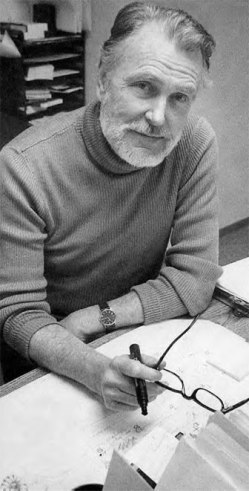
When discussing the Hammer family, Jimmy Sangster was there at the start of their rise, not to mention having a big part of it. He started with Hammer at the bottom, working his way up through the ranks, as second unit director, assistant director, production assistant, production manager, then finally into writer, producer and director. But while he may have held many different titles in the industry, it was as a writer where he made his real mark.

By the time that Hammer was going to do their version of Frankenstein, Sangster had worked on over 30 films as either Production Manager, or Second Unit Director or Assistant Director. He had written screenplays for one short film and one feature by then, both for Hammer. The short film was A Man on the Beach and the feature was X the Unknown (1956), sort of their version of The Blob (1958) even though that came out two years later! But he was given the task to write this new version of Shelley’s tale, but told to make sure he stays away from Universal’s version, in fear of getting sued for copyright infringement. He decided to focus more on the creator than the creation, which started Hammer toward their path to being know as The House of Horror!

Continue reading

Horror History: José Antonio Pérez Giner

perez_ginerJosé Antonio Pérez Giner
Born 1934

One person that is really needed to make movies happen is the producer. They are the ones that get the money to be able to make the money. Even on the lowest of budgets, someone needs to make sure things are happening, from having a crew, getting them paid, if they are even getting paid, or at least fed while their working. But it is also finding the right people for the job. So while they might not have their hands directly in the creative aspect of the filmmaking process, it is still a very important job.

In the Spanish film industry, José Antonio Pérez Giner was one man who help bring a lot of my favorite Spanish horrors to the screen. He started as a production manager, working on films like Sergio Leone’s The Good, the Bad, and the Ugly (1966), as well as a couple of Paul Naschy’s films, such as The Werewolf vs the Vampire Women (1971). But he moved into the producer role, getting films made like Naschy’s Horror Rises from the Tomb (1973) and Blue Eyes of the Broken Doll (1974), as well as Amando de Ossorio’s Tombs of the Blind Dead (1972) and Loreley’s Grasp (1974), as many, many other great films. Also love knowing that there are some producers out there that understand the importance of the horror genre, even if they know it is a profitable one, they still want to create something magical. And I think he did just that.

In 2003, he was awarded the Career Award at the Sant Jordi Awards. In 2008 at Sitges, he was presented the Time-Machine Honorary Award.

Horror History: Tom Conway

tomconwayTom Conway
Born Sept. 15th, 1904 – Died April 22nd, 1967

Older brother of actor George Sanders, Tom had to change his name after he lost a bet with his brother on who would change their name for show business.  Born in a wealthy Russian family that were forced to leave and move to England for some reason, political or otherwise.  While Conway appeared in quite a few films in his career, he never really hit the big time.  Even starring in 3 films for Val Lewton in the early ’40s, such as The Cat People (1942), I Walked with a Zombie (1943), and The Seventh Victim (1943), his career just never took off or lasted that long.  Due to his failing eyesight and problems with alcoholism, worked started to get fewer and fewer.  He did appear in two films for Edward L. Cahn, The She-Creature (1956) and Voodoo Woman (1957).

The later part of his life was spend with very little money and even less fame.  At the end, he was found dead in his girlfriend’s bed, at the age of 62.  It is a shame that a somewhat talented actor who was doing pretty good at one point in his life, but possibly due to the alcoholism, it effected his career too much for him to stay working.  But at least we can still remember him and his work, even after all years later.

Horror History: John P. Fulton

johnpfulton1John P. Fulton
Born Nov. 4th, 1902 – Died July 5th, 1966

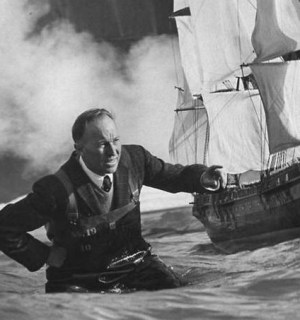
Fulton got into the film industry, even with strong disapproval from his father.  Starting out as an assistant cameraman, which basically meant carrying around the camera and equipment, it wasn’t too long before he moved up to cameraman.  But it wasn’t long before he worked more on the special effects and trick photography than actual cinematography.  He worked on many of the Universal classic monster films, such as both Dracula and Frankenstein and a lot of their sequels/spinoffs.  But one of his best known works was making Claude Rains invisible in the James Whale’s The Invisible Man (1933), which he continued on  many of the films in this series, which would get him 3 different Oscar nominations.  He would eventually take home 2 Oscars for Wonder Man (1945) and The Ten Commandments (1956).

The film industry wouldn’t be where it is at now  had it not been for some of the techniques that Fulton developed back in the early ’30s.  He was definitely an innovator and changed movie history.

Horror History: Arthur Grant

arthurgrantArthur Grant
Born 1915 – Died 1972

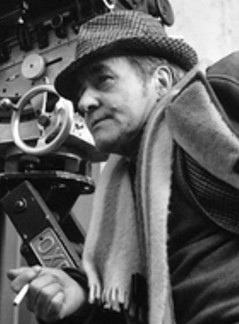
One of the things that Hammer Films are most known for is their look. And one of the reasons for that is due to the cinematographer. Working with the director, they are the ones that created the way a scene looks when all is said and done. And one of the most prolific ones for Hammer was Arthur Grant. He started in the film business at the age of 14 and working his way up to director of photography, or DP as they were called. His first Hammer film was The Abominable Snowman (1957) and worked on many of their most popular films of the ’60s and into the ’70s, such as Curse of the Werewolf (1961), Paranoiac (1963), Plague of the Zombies (1966) and Frankenstein Must Be Destroyed (1969). His last film was Demons of the Mind (1972).

The cameraman is one person that very seldom gets the credit they deserve. Sometimes what we seen on the screen might be more due to them than the director. Whether it be one of their black and white classics to their colorful Frankenstein pictures, Grant could make them look even better. And when you have films like the ones that Hammer was making, the look of the film is extremely important. And he never seemed to let Hammer, or their fans down.