
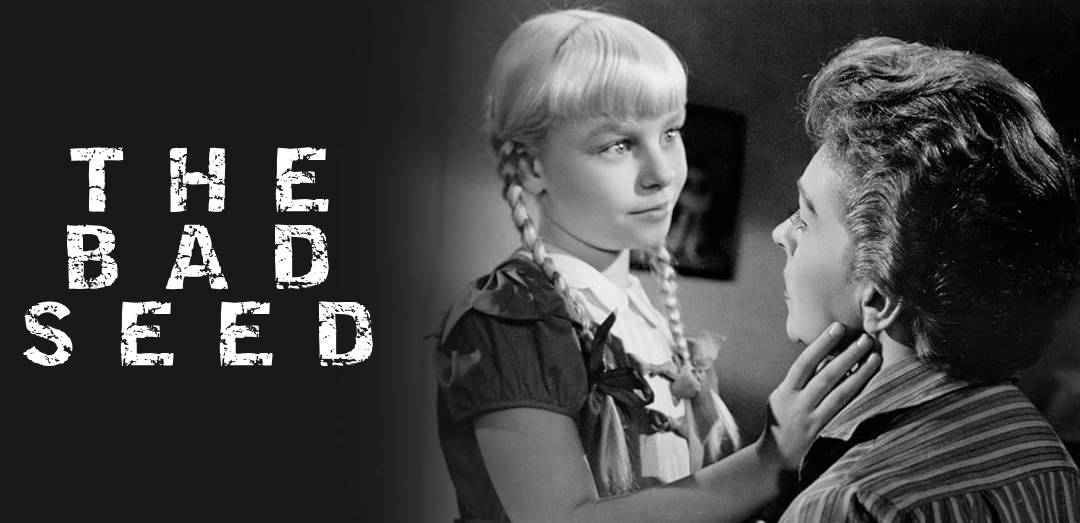
(1956)
Directed by Mervyn LeRoy
Starring Nancy Kelly, Patty McCormack, William Hopper, Henry Jones, Evelyn Varden, Eileen Heckart, Joan Croydon, Gage Clarke, Jessie White, Paul Fix
I am amazed more and more by this film, every time I watch it. I’m astonished and shocked at the subject matter for starters. For a movie to be made dealing with a very young female sociopath that possibly murdered a fellow classmate, delving into the whole theory of mental illnesses and the debate of “nature versus nurture,” is a shocking theme to be tackling at any time, but especially for 1956. Then you discover it was based on a stage play from 2 years earlier, which had huge success, running over 300 performances. The play was based on a book of the same name, written by William March, which came out the same year it was adapted for the stage. The film follows the book and stage play, for the most part. But the ending is quite different, but we won’t go into that so we’re not giving away any spoilers.
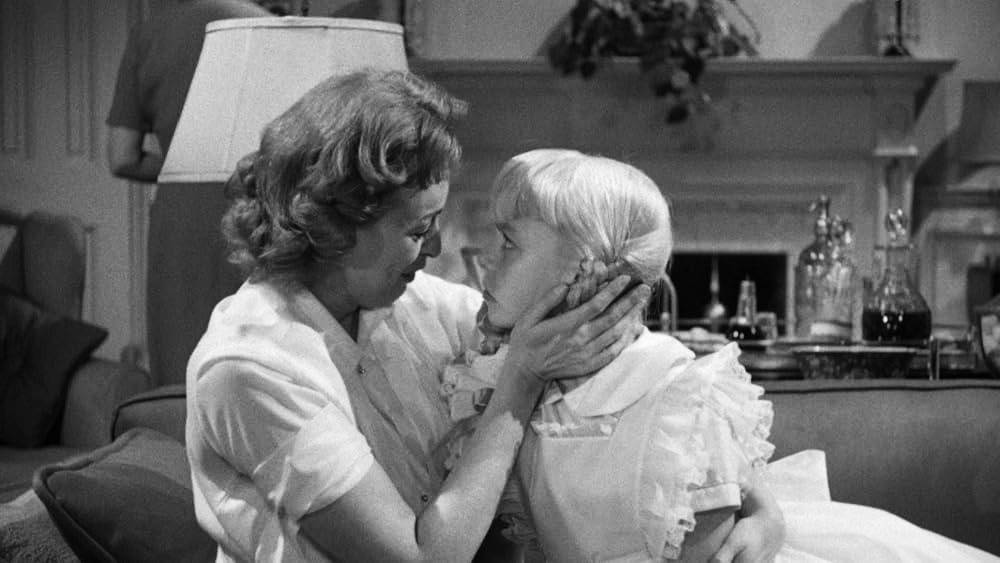
The story is about the perfect and angelic Rhoda Penmark, the nicest 8-year-old daughter anybody could wish for. Except that she’s a sociopath that may have killed before. Near the beginning of the film, a young boy named Claude is found dead at one of the schools outside events, who apparently drowned in the river. He was a classmate of Rhonda’s and had recently won a penmanship award at school, which had Rhonda fuming!
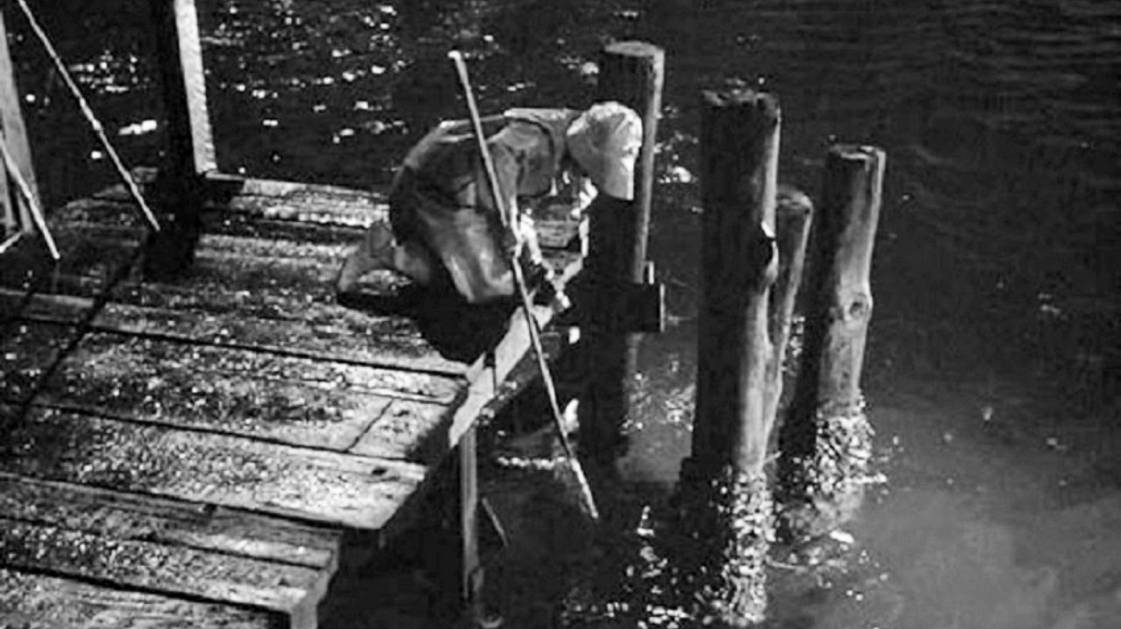
Now to all of Rhoda’s family and their close friends, she is just an angel. Except for Leroy, the caretaker of the boarding house they all live in. He loves to pester and antagonize Rhoda, thinking he sees through this little girl’s façade. The point in the film when he realizes just what he’s dealing with is just terrifying. But to everyone else, she’s perfect. That is, until her mother starts to notice things about Rhoda, the things she says, or does. And with this recent death of her classmate, especially when the kid’s parents come to see Rhoda to ask her what really happened, Rhoda’s mother, Christine, view of her child starts to crack.
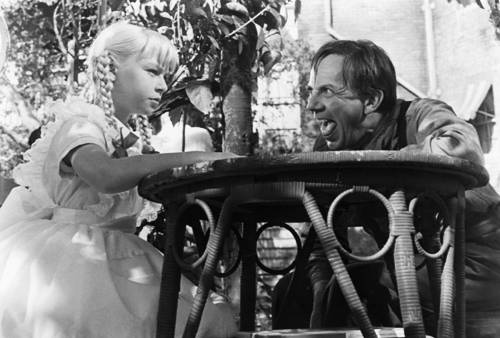
Nancy Kelly plays Christine and is who the audience follows along with as she starts to realize what her daughter really is, seeing more and more of what is behind that smiling face. We feel every bit of heartbreak as she does. Patty McCormack also gives an incredible performance as young Rhoda. While she was 3 years older than the character she’s playing, her performance as a young girl that seems perfectly justified in her actions, is just downright chilling. Both her and Kelly came from the play adaptation of the book, along with actors Eileen Heckart, Joan Croydo, Evelyn Varden, and Henry Jones. Kelly won a Tony Award for her role on the stage, and for the film, she was nominated for an Oscar for Best Actress, while McCormack, and Eileen Heckart, who plays the drunken mom of the dead boy Claude, both got a nomination for Best Supporting Actress. Like Kelly’s performance as Christine, seeing Heckart’s Mrs. Daigle just wanting answers to what happened to her little boy, just wallowing in anguish, grief, and alcohol, is a performance you’ll think about long after the film.
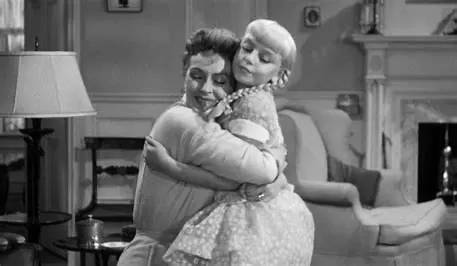
Because the audience sees through this little terror, we think we know from the start what she might be capable of. Even the scenes with Leroy, played by Henry Jones, feel like two little kids arguing with each other, until a certain point, when Leroy realizes what he’s talking with.
For a film in the mid ’50s to be taking on the subject of mental illness, in a very serious way, going into the subject of is it something past on through generations or it is because of the way the person was brought up, then I remember that it was a novel first, which makes a little more sense. But then kudos to writer John Lee Mahin and director Mervyn LeRoy for keeping that serious tone into the film. Granted, the Hayes Code was making sure they didn’t do or show anything they weren’t supposed to, but I feel the real punch of the story is still in there. It’s truly a ground-breaking film and is one that I feel is just as effective today as it was 70 years ago when it first came out.
The new Blu-Ray from the Warner Archive Collection looks just beautiful, like any old black and white films should aspire to look! There’s not a lot in the way of extras, but we do get an audio commentary by Patty McCormack, along with Charles Busch, which is a lot of fun hearing her reminisce about the film, as well as the original play, and her acting. There is also an interview with McCormack, and the original trailer.
Thanks to AV Entertainment for the review copy! You can purchase your copy HERE.

