
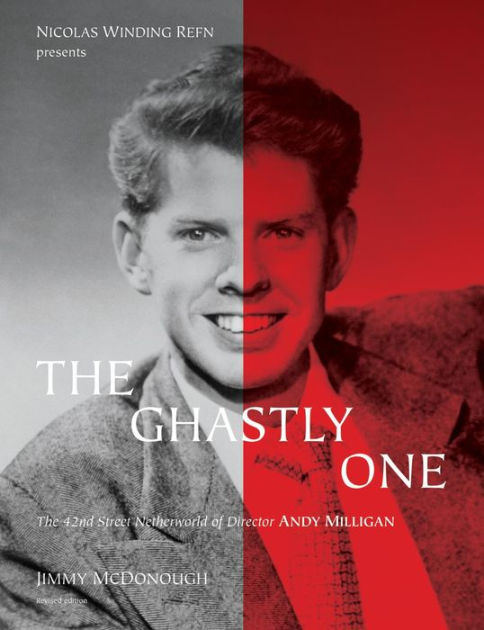
The Ghastly One: The 42nd Street Netherworld of Director Andy Milligan
Revised Edition Published by FAB Press, 2022. 256 pages.
By Jimmy McDonough
This has been one long journey. I started reading this revised edition back in 2023, but for some reason, I kept putting it down for a variety of reasons. There were other projects that got in the way, books I needed to get to that were sent to me to review, and life in general. But first and foremost, it was probably just because it is such a depressing story!
I knew of Milligan from seeing a few of his movie titles on VHS back in the day, namely The Rats are Coming! The Werewolves are Here! (1972) but never watched too many of them. In 2021, when Severin Films released their box set, The Dungeon of Andy Milligan, that featured 14 of his films, I knew I would pick it up. By that time, I had really become interested in a lot of these different low budget filmmakers, such as Steckler, Adamson, Buchanan, and knew that Milligan was one that I really wanted to learn more about. And I wasn’t let down by what I saw.
But getting to the book, it really is a fascinating and depressing look into this filmmaker who somehow made 31 films with budgets that would make Roger Corman blush. But he got them made and into the theaters, some of which did pretty good business, mainly on 42nd street. But unfortunately, Milligan never saw much of that money due to shady dealings with producers and distributors. Author McDonough really delves into Milligan’s life, sometime wading through some really dark times. Milligan was not a nice guy. He constantly and consistently pissing people off, not to mention getting into knock-down-drag-out fights with just about anybody that worked with him.
The book starts in the beginning, with the author describing Milligan, who “knew darkness well. He was one of those creatures who rode the midnight train, came from the land of screaming skulls. Milligan was also one of the purist artists I’ve ever known. Most likely you’ve never even heard his name.” That statement alone should be enough to make you want to read this book. The stories are almost too incredible to believe, not that they didn’t happen, but that they continued to happen throughout Milligan’s career. But he kept going and kept making films.
The early days he spent time at the Café Cino, from the late ‘50s to the late ‘60s, might make you want to put down the book, only because it just shows how much of an asshole Milligan was, but then it also shows that the people around him weren’t exactly angels either. It was just a very dark and depressing scene for all these characters to be intertwined with. Many of them never made it out alive either. But no matter how much of a jerk Milligan was, by the end of the book, you realize a lot more about him. It’s one of those things that the story doesn’t justify his actions or what he’d done but does give you a lot more understanding about him. That is where McDonough really does an excellent job because he doesn’t hide from the dark side, trying to glorify Milligan or try to make him out something that he wasn’t. There’s no filter. No gloss. Instead, there are times where you can almost smell the scene he’s describing, and not in a good way. But at the same time, it does show the genius hiding in there, desperately trying to get out.
If you have the Severin Box set, then you should already have this book. If you don’t, and are a fan of low budget filmmakers, then I couldn’t suggest picking up both the Severin set and the book and then starting down that path in learning about one of the most intriguing filmmakers out there. For better or for worse, there really wasn’t anybody like Milligan.
 kitleyskrypt.com