
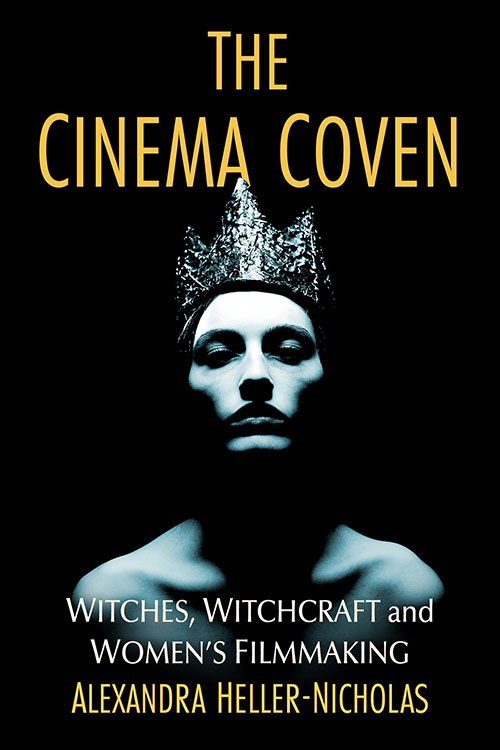
The Cinema Coven: Witches, Witchcraft and Women’s Filmmaking
Published by McFarland, 2024. 208 pages
By Alexandra Heller-Nicholas
Do we need another book on female filmmakers? Honestly, yes, we do. It goes back to my thoughts when I saw The Substance (2024) in the theater last year. Did we need another movie showing us how shitty women are treated in the film industry? Then you realize it is still going on, and that we obviously still haven’t learned enough, so that message must continue on.
So yes, we definitely need another book on women filmmakers!
As a life-long cinephile, at any point when we can learn more about a sub-genre, or subject, that we might not be familiar with, it just opens doors. It opens up more titles that we might not have heard about. It opens up more filmmakers that we might not have known. Or we knew their work, but not who it came from, or who made it. It also opens up, and this is probably the most important part, a new or different way of thinking about and looking at a specific story or subject that might have been lost on us. The beauty of any art form is being able to see something different once we’ve learned more about it. It’s inevitable. And it is one of the things I just love about cinema and more importantly, reading about it.
The obvious thing while reading The Cinema Coven was the parallel of witches and female filmmakers, who are the outsider that is feared by the male dominated industry because of their talent, strong will, and devotion to their craft. I will say that while reading this, and all the historical data presented, as a white male, I found a lot of the information very depressing. To think that as a species, we have done even a part of what is in history books is almost unfathomable. Yet there it is. Once again, I can only hope that we continue to learn from our bloody history and do better. And as we all know (or at least hope) that knowledge of our history should help us not repeat it. Then again, these days, I’m not sure that is true.
In discussing the Runano Nyoni’s 2017 film I Am Not A Witch, William L. Bilzek wrote that it “is a criticism of naming or labeling someone in order to create the other. By creating the other, we have someone we can abuse, revile, blame for our problems, and so on.” That reasoning has been used so many times over the years, for many different “others”, just because some refuse to understand something, therefore it is bad.
While discussing the horror genre, director and co-writer of She Will (2021), Charlotte Colbert says “Horror filmmaking has such a strong artistic and aesthetic past. It allows for people to take more risks in terms of aesthetic boldness. And also, in terms of an experience, the experience of trauma is an experience of horror. It felt truthful to the story itself and the themes that are explored.” This isn’t the first time I’ve heard filmmaker say that the horror genre is a great place to tell very meaningful stories, and yet still be effective. But like female filmmakers, just usually doesn’t seem to get the credit for it.
Within these pages, you’ll learn about early films, such as the 1952 Finish film, The White Reindeer, where the star of the film, Mirjami Kuosmanen, also co-wrote it. You’ll also read about more recent films, within the last two decades, where female filmmakers were able to use personal stories incorporated into the horror genre, make it effectively scary, but also deliver their message. They give me hope.
If you’re smart and taking notes while reading this book, you will have one hell of a list of films to check out. I know I do. Some newer titles, some that have been out for decades, once again showing that it doesn’t matter how long you’ve been a fan of the genre, there is always more to discover. But I think the important part of this book to come away with, from our history as humans and how we treat people, as well as women working in the genre. Maybe we can change that whole thing about repeating history. Only takes one step at a time.
 kitleyskrypt.com