
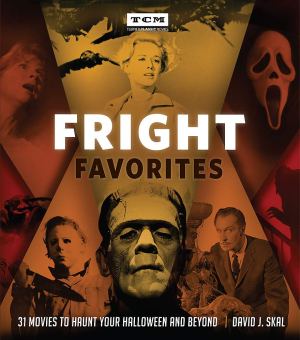
 Horror scholar David J. Skal has a new book coming out this fall, just in time for Halloween, entitled Fright Favorites: 31 Movies to Haunt Your Halloween and Beyond. Presented by Turner Classic Movies, Skal takes on 31 films ranging from the silent era, hitting a few titles from each decade through the ’80s, and a few beyond that. Most of these everyone will agree are classics, with a few comedies listed in the later day titles. The description in Amazon says they are “family-friendly” but not sure The Exorcist (1973) and The Thing (1982) are ones I would be screening for 8-year old Timmy! Continue reading
Tag Archives: Dracula
Horror History: Karl Freund
 Karl Freund
Born Jan. 16th, 1890 – Died May 3rd, 1969
Karl Freund was a German cinematographer that worked with some other top names in the business: Robert Wiene, F.W. Murnau, and Fritz Lang. When he finally made his way over to the states, Universal quickly put him under contract, where he would photograph several of their films, including a few horror films like Dracula (1931) and Murders in the Rue Morgue (1932). He would eventually direct a few films, two of them being horror, and both of which have become classics. The first one was The Mummy (1932) starring Boris Karloff, the second one was Mad Love (1935), starring Peter Lorre. This would be his last film as a director.
Freund went back to being a cameraman, because that is what he knew best. He won an Oscar for Best Cinematography for The Good Earth (1937), nominated again for Blossoms in the Dust (1941), and was given an Oscar in 1955 in the Technical Achievement department for the design and development of a direct reading brightness meter. He eventually went to work in television, specifically on the I Love Lucy show, and helped developed the 3-camera system for filming TV shows, which is still being used today. He also developed a new way of lighting the sitcoms, making them look a lot better than what they had been.
So while he was obviously a very talented cameraman, and gave the industry some amazing technical advances, he also gave us horror fans some great movies to watch, which we still continue to do today!
Movie Review: Lugosi – The Forgotten King
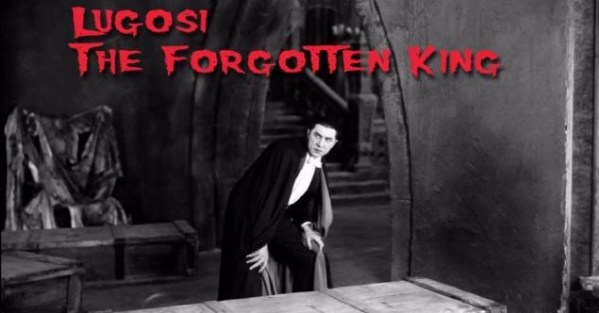
Lugosi: The Forgotten King (1985, 2018)
Directed by Mark Gilman Jr. & Dave Stuckey
In 1985, with the early days of VHS tapes and video stores, there weren’t too many documentary titles out there, especially on horror movies or their stars, unless you count a few trailers collections. But I can remember coming across one title in particular that was on the shelves, Lugosi: The Forgotten King. Being an young and eager fan to learn as much as I can about the horror genre, especially one of its icons, I immediately rented it. Even though the running time was short, showed the audience a little bit more behind the man and really how much of a talent he was. Now, 35 years later, it is out on DVD in an updated version, through Operator 13 Productions. Continue reading
Movie Review: Dracula, Prisoner of Frankenstein
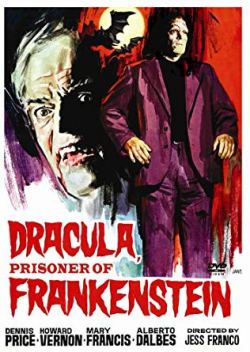
Dracula, Prisoner of Frankenstein (aka Drácula contra Frankenstein, 1972)
Directed by Jesús Franco
Starring Dennis Price, Howard Vernon, Paca Gabaldón, Alberto Dalbés, Britt Nichols, Geneviève Robert, Anne Libert, Luis Barboo, Fernando Bilbao, Josyane Gibert
 I know it is hard for some fans to think of Jess Franco as a highly crafted filmmaker, but there are more than a few examples in his filmography to prove that. This, however, is not one of them.
The first time I saw this film was from the Wizard Video VHS tape, under the title The Screaming Dead, which is quite different when comparing it to the DVD of Dracula, Prisoner of Frankenstein. Right away you’ll notice that it is extremely cropped with most of the opening names in the credits being cut off on the sides. The film is sequenced differently as well, having some parts in there that are not in the DVD version! For the sake of sanity, I’m just going to talk about the DVD version from Image Entertainment back in 2006. Continue reading
Lugosi Film Fest!

Sure this is close to a year away, but no reason why you can’t start planning out events for next year, right? Creepy Classics and Monster Bash have scheduled their next film fest, this time featuring the work of Bela Lugosi! Taking place on Aug. 14th & 15th at the Palace Theatre in Canton, Ohio, they will have 2 days of Lugosi films! Below is the schedule: Continue reading
Dracula & Frankenstein on the Big Screen!

Back in 1938, a theater owner named Emil Umann rented prints of the original Dracula and Frankenstein, along with Son of Kong, and screen them as a triple feature. He got the rental of the films pretty cheap because the studios didn’t think anybody cared about these monster films anymore. Oh how they were wrong. These screenings became so popular, that Umann started running them close to 24 hours a day to keep up with the demand. He even contacted Bela Lugosi to come down to make appearances during the screenings. Once Universal discover this, not only did they increase the film rentals, but made 500 more prints and started renting them to other theaters. Plus, they immediately put another Frankenstein film into production!
If you haven’t had the chance to see these two classic monster films on the big screen and are in the Chicagoland area, now is your chance. The Pickwick Theater in Park Ridge, IL, will be screening both Dracula and Frankenstein on October 30th, starting at 7pm. The Pickwick is a great theater to see these films too! So make your plans now to make sure you attend and see our horror history come to life on the big screen!
For more information, just click HERE.
Color Comes Back to Langella’s Dracula
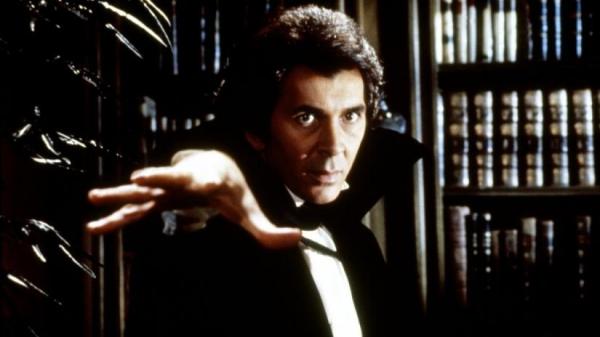
I can remember watching the 1979 version of Dracula on VHS, and loving the look, the feel, and the atmosphere of it, especially in its glorious color. But something happened when it was released to DVD for the first time. All of the color was bled out, making it almost look black and white. Here’s the little backstory to that. Originally, director John Badham wanted to film it in black and white but the studios said no way in hell. When it came to be released on DVD, Badham had control over the look of the film and had it modified to fit the version he originally wanted to make. Continue reading
Master of Dark Shadows
 You couldn’t grow up watching TV in the ’70s and not know of the work of Dan Curtis. His work had a huge impact on my life, from The Night Stalker (1972), The Norliss Tapes (1973), Trilogy of Terror (1975), and so many other made-for-TV movies. Oh yeah, and there was that series Dark Shadow that you might have heard of. Needless to say, if it was from Curtis, you know it was going to be worth your time. And now, thanks to director David Gregory, we’re going to have a chance to learn a little bit more about this amazing man.
Set to be released next month, this feature length documentary covers Curtis and his work, hearing from a ton of people that worked with him and were fans of his work, such as Ben Cross, Roger Davis, Jonathan Frid, Whoopi Goldberg, John Karlen, William F. Nolan, David Selby, Barbara Steele, Kathryn Leigh Scott, Bob Cobert, and many more.
While he definitely worked outside the horror genre a few times, like writing, producing, and directing the Emmy Award Winning mini-series War and Remembrance (1988-89), he made such an impact with horror fans with his films. And they are still as entertaining now, decades later, as they were then. Kudos to Gregory for helping bring light to this talented man that was use to working in the shadows.
Bram Stoker’s Dracula 3-CD Special Edition

This really must be the year for special edition soundtracks for Dracula films. Recently Varèse Sarabande had released a 2-CD special edition set of John Williams’ score for the 1979 version of Dracula, which we promptly pre-ordered the minute we heard that news since that has always been a favorite score of mine. And now, thanks to the fine folks at La-La Land Records, they will be releasing a 3-CD set for Bram Stoker’s Dracula (1992), giving us fans almost 3 1/2 hours of this incredible music from Wojciech Kilar.
Horror History: Bob Cobert
 Bob Cobert
Born Oct. 26th, 1924
If you were a fan of Dan Curtis and his early TV work, then you are well aware of the work of Bob Cobert, even if you don’t recognize the name. He is probably best known for working on the famous Curtis TV series Dark Shadows, that ran from 1967 to 1971. He also worked on the two feature films based on the series, House of Dark Shadows (1970) and Night of Dark Shadows (1971), as well as the 1991 revival. But he also did a ton of different made-for-TV shows in the early ’70s with Curtis. Titles like The Strange Case of Dr. Jekyll and Mr. Hyde (1968), The Night Stalker (1972), The Night Strangler (1973), The Norliss Tapes (1973), Scream of the Wolf (1974), Dracula (1974), Trilogy of Terror (1975), Burnt Offerings (1976), and so many more.
Working outside of the horror genre, he also composed the music for Curtis’ war epics The Winds of War (1983) and War and Remembrance (1988), as well creating his fair share of game show themes!
Cobert’s music had its own unique style that was recognizable, memorable, and always added to what we were watching on screen. Those films and shows would definitely had lost something without had it not been for his music.

