Horror History: William K. Everson

williamkeversonWilliam K. Everson
Born Apr. 8th, 1929 – Died Apr. 14th, 1996

While Everson never actually made or appeared in the movies, he helped the film business more than most. He was a lifelong fan of movies and spent most of his life writing and teaching about, and collecting films, working very hard to get other people to see some of the more rare titles. Leonard Maltin called him “a movie missionary” since he would travel the world to teach people about this movies. Everson had a knack for finding lost or rare pictures. But just finding them wasn’t the real fun part, it was being able to share and show other fans these rare and interesting titles. In the ’50s, he had formed a film society where he would show these films on a regular basis. At one point, he even got into a little trouble with the FBI, as did a few of the bigger film collectors since the studios were not happy with these private collectors having prints of “their” movies. But Everson’s reasoning and dedication to keep these great movies alive and for people to see them outweighed any wrong doing.

Horror fans might recognize his name from his books Classics of the Horror Film and More Classics of the Horror Film. The first book was one of the first of its kind, showing and teaching fans everywhere about all of these great films, through plenty of stills and his praise. He worked very hard in his lifetime to make sure that these films were going to be around for years to come and that other fans could see them. He knew the not only the importance of the classics, but also the importance of spreading one’s knowledge of them as well to like minded fans. That is one thing that Everson has instilled in me to this very day.

Horror History: Jack Arnold

JackArnoldJack Arnold
Born Oct. 14th, 1916 – Died March 17th, 1992

Arnold is another unsung hero in the horror and sci-fi film genre. He started his movie career as a documentary filmmaker, even being nominated for an Oscar for his work. After a couple of feature films, he directed the one that would start his rise as a great sci-fi / horror film director, It Came From Outer Space  (1953). While very creepy, this alien invasion was much different than the other films at the time since this wasn’t really an “invasion” film at all. His next film would make him an even bigger name, creating another classic Universal Classic Monster, Creature from the Black Lagoon (1954). He would later go one to direct its sequel Revnge of the Creature (1955), Tarantula (1955), The Incredible Shrinking Man (1957), and a couple other minor titles.

With his films, Arnold tried to show audiences that maybe these aliens, creatures, and strange people were not as threatening as we’d like to think. And that message can still be seen and felt even today, all those years later. That shows just how good of a filmmaker Arnold was.

Horror History: Javier Botet

JavierBotetJavier Botet
Born July 30th, 1977

Botet is the Spanish version of Doug Jones. When we see him in a movie, we might not recognize him since he is underneath makeup that is hiding his true face. Being very tall and extremely thin, and being able to contort his body in unusual ways, it makes him perfect for creature roles, such as the old skinny lady in Jaume Balagueró’s [REC] films. The reason for Botet’s physical condition is Marfan syndrome which causes the person to be very tall and then, and seemingly long extending arms and fingers.

His first screen appearance was that of a humanoid in Brian Yuzna’s Beneath Still Waters (2005). Not only appearing in the [REC] films, but he also has been in two of Álex de la Iglesia’s recent films, Last Circus and Witching and Bitching. But not just appearing in Spanish films, he appeared as the title character in the 2013 film Mama. Unfortunately, most of his work was covered with CGI. There is some test footage that was used of him playing the character without any CGI and it is a hell of a lot more creepier than the final product. Once again proving that a real actor in makeup can be more effective than a cartoon. Especially when they are being preformed by a talented artist like Botet. You can check out that footage HERE.

More recently, he has appeared in films like Crimson Peak (2015), The Other Side of the Door, and as the Crooked Man in The Conjuring 2 (both 2016), and is rumored to be playing the Mummy in Universal’s latest remake.

Horror History – Geoffrey Bayldon

bayldonGeoffrey Bayldon
Born Jan. 7th, 1924

While he might be known for his extensive work on television and in the theater, for us horror fans, Bayldon was known for the little roles that he appeared in a handful of horror films, most notably in the 1972 films Asylum for Amicus Films, which he is pictured here.  He was trained to become an actor in the Old Vic Theatre School from 1947 to 1949, making his first stage appearance in 1949.  According to Bayldon, he was also offered the role of Doctor Who in the first incarnation of him, as well as the second.  But for some reason, he turned them down.

For horror fans, you will see Bayldon pop up in films like Frankenstein Must Be Destroyed (1969), Tales from the Crypt (1972), The House That Dripped Blood (1972), and even The Horror of Dracula (1958).  Like his role in ASYLUM, his performance in The House That Dripped Blood, as the person who sells John Pertwee a Dracula cloak, is so fun and so memorible.  Bayldon is another one of those many character actors that filled out the British film industry, making the films so much more entertaining.

Horror History: George Barrows

georgebarrowsGeorge Barrows
Born Feb. 7th, 1914 – Died Oct. 17th, 1994

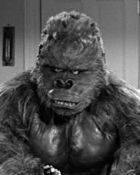
George Barrows is most known for the roles he played where you didn’t even see his face. He was one of those ‘guys in a gorilla suit’. But not just that, he was one of the BEST in that league, appearing in tons of movies and TV shows as a gorilla. Barrows actually had made his own suit, and spent quite a bit of time studying real gorillas to get their movements down. Of course, one of his most famous roles was that in the the 1953 film Robot Monster.

George-Barrows-Addams-Family-1He also appeared in plenty of shows and movies in small bit parts, as well as working as a stuntman. He is one of those “men in suit” guys that never received proper screen credit for the hard work that they did over the years, only because they were hidden underneath their costume. This is something that needs to be changed.
Horror History: Victor Israel

victorisraelVictor Israel
Born June 13th, 1929 – Died Sept. 19th, 2009

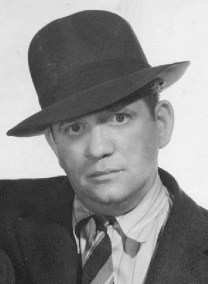
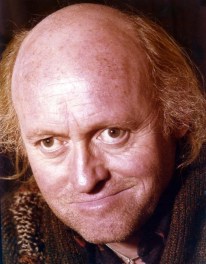
If you’ve watched any Spanish horror films of the ’70s, then I’m pretty sure you’ve seen Victor Israel before. This guy is like the Spanish version of England’s Michael Ripper. Making well over 150 films, he usually was cast as little bit parts, but was always so recognizable, that it would always make you think “hey…I’ve seen that guy before”. He played in several different genres, like appearing alongside Lee Van Cleef in Sergio Leone’s The Good, the Bad, and the Ugly (1966). Of course, for us, it was the countless horror movies that he appeared in that had us remembering that face of his. With his pudgy appearance, balding and strange eyes, he was always easy to spot. It is actors like this, that never make it as a top-billing star, but are the ones that fill out the colorful pallet of the movie, making it so much more interesting to watch. I know that is definitely the case for me when it comes to horror films.

Some of his most noteworthy appearances were in films like The House that Screamed (1969), or Graveyard of Horror (1971), Paul Naschy’s Night of the Howling Beast (1975), and of course as the baggage clerk in Horror Express (1972). He even appeared in Bruno Mattei’s Hell of the Living Dead (1980).


Horror History: Hamilton Deane

hamilton-deaneHamilton Deane
Born 1880 – Died Oct. 25th, 1958

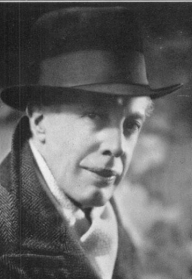
Hamilton Deane was a actor and playwrite back in the late 1800’s, first appearing on the stage before his 20th birthday. While he worked with the Henry Irving Company (the one that Bram Stoker was the stage manager for), he went on to form his own troupe in the early ’20s. He wanted to bring Stoker’s Dracula to the stage and spent 4 weeks writing it out when he was sick with a bad cold.

Deane was the man responsible for turning Dracula from the monster he is in Stoker’s novel, to the urbane, well spoken (with an accent of course), well dressed in a tuxedo and flowing cape. He wasn’t the monstrous creature from the novel, or like the one from the unauthorized German film Nosferatu, where he was a rat-like creature. Deane’s play was a big success, with him playing the role of Dr. Van Helsing, and played for many years.

When it came over the states, it was rewritten by American playright John L. Balderston, where it also was a big success. It was this adaptation, the combined ideas from both Deane and Balderston, which pretty much what the Tod Browning film was based on. A few years later, he would also commission a play adaptation of Shelley’s Frankenstein be scripted as well.

Horror History: Mark Robson

MarkRobsonMark Robson
Born Dec. 4th, 1913 – Died June 20th, 1978

Robson started his career in the film industry at 20th Century Fox in the prop department. The rumor goes that his career there was ended when he asked studio head Darryl Zanuck for a promotion, which got him fired. He then moved to RKO Pictures and was trained how to be an editor, becoming an assistant to Robert Wise on editing Orson Wells’ Citizen Kane. He was later assigned to work as the editor on the B-horror films of Val Lewton, where he did that for two years, working on films like The Cat People, Journey into Fear, I Walked with a Zombie, and The Leopard Man.

After the success of those films, RKO was going to move Lewton up to the A-picture budgets, but only if he uses their choice of directors on his next picture, The Seventh Victim. But Lewton had already decided that he wanted to give Robson a shot at directing. And because Lewton stood behind his people, he sacrificed his chance to increase his budgets and gave Robson that chance. Robson would go on to direct three more titles for Lewton: The Ghost Ship, Isle of the Dead, and Bedlam.

A short time after that, RKO didn’t pick up Robson’s contract and he was out of work for two years. Then an independent producer hired him to direct the boxing movie Champion, which got its star,  Kirk Douglas, an Oscar nomination for Best Actor. After that film, he was sought after for bigger budgeted films. In his career, Robson directed seven different actors in Oscar nominated performances, such as Susan Hayword and Russ Tamblyn.

Robson was credited or at least co-credited with creating the famous “Lewton Bus” technique in the film The Cat People, which is still referred to today in the industry.

Horror History: Macario Gomez Quibus

macMacario Gomez Quibus
Born 1936

Better known as MAC, this Spanish artist worked for a time in advertising before getting in to making posters for films. His first big break was when he was hired to created the 3-sheet poster for Charlton Heston’s The Ten Commandments, which was an huge success. In fact, Heston was so impressed with this artist’s work, he made sure that he had the opportunity to meet him when he was in Spain filming El Cid. MAC gave him a portrait he created of the star as Moses, which Heston reported had hanging in his office for many years.

Signing his work with just the simple MAC, he worked in all genres, from big budgeted films to the smaller ones. Going through the ones he did for horror films and you’ll see plenty of them that you’ve probably seen over the years. Some of the artwork is just staggering, seeing the talent this man had. With dead-on likenesses, beautifully arranged montages of scenes from the movies, he truly created some incredible pieces of art. Now you know who the talented man that created them.

These artists, that help drawn in thousands of people to see these movies, are so underrated and almost forgotten. These people’s names should be just as well known as the people who were in them. We need to keep their names alive, as well as their work. While these are just a few posters that he created, check out this website where you can see many more incredible pieces of art. Just click HERE.


Horror History: Sam Newfield

SamNewfieldSam Newfield
Born Dec. 6th, 1899 – Died Nov. 10th, 1964

The big difference between the people making movies back in the early days of cinema and today’s standards is the output. Even in the ’70s and ’80s, it might be a year or two between a director’s films. Nowadays, it could be years before we see a new one. But back in the ’30s and such, there were guys cranking out film after film after film. And nobody was more proficient in this than Sam Newfield.

There were some years that he is reported to have directed 15 to 20 pictures! That is more than 1 a month! Sure, these were low budget films and time really was money back then, so they didn’t the luxury of multiple or even second takes, or reshoots if someone make a mistake. It was action…cut…print. And then on to the next one. There were some titles that were supposedly had a shoot scheduler of only 3 days!

Newfield started his career at the bottom of the business, first as a runner, then set assistant, actor, but always moving up the later until he got to direct. His first film was a silent film made in 1923, but would work in just about every genre, making a ton of westerns and comedies. But in that time, he also made a few horror titles. Such as The Mad Monster (1942), Dead Men Walk (1943), The Monster Maker (1944) and The Flying Serpent (1946).

So while the quality of Newfiled’s films may not be top notch, he was still making those movies quick and fast, never letting anything get in his way to get the film finished in time. And for that, if anything, we have to give him credit for.