Saly apparently is one mysterious character since it is pretty tough to find out much info about here. What we do know is that her first film she appeared in was the 1972 film La Guerrilla, and that she continued to work in films until 1985.
It was in 1975 when she made her first horror films, both with Amando de Ossorio. The first one was The Possessed, also known as Devil Witch Child, and then the last Blind Dead entry, Night of the Seagulls. It was also in that same year where she started to work with Paul Naschy. In fact, the rest of the films she appeared in where Naschy films, and the last six of them, she was even producer on them. Rumor has it that she was a flamenco dancer before getting into the film business, but not much information is available, or what happened to her once she left the business.
But no matter what, the films she did appear in, it was always a treat to watch her on screen. Her performance as the Countess Bathory in Naschy’s Night of the Werewolf is just enchanting. It must be something with those amazing eyes! So if you’re watching a Naschy flick that was made between 1975 and 1985, there’s a good chance Saly is in there somewhere.
Bill Thurman Born Nov. 4th, 1920 – Died Apr. 13th, 1995
While Thurman had appearances in notable films like Spielberg’s Close Encounters of the Third Kind (1977) or Bogdanovich’s The Last Picture Show (1971), as well as Hollywood films like Places in the Heart (1984) and Silverado (1985), he really is more known to cult fans that love films that are more off the beaten path. Thurman appeared in films like Creature from Black Lake (1976), The Evictors (1979) and the cult title Mountaintop Motel Massacre (1986). But digging even deeper into the cult history, Thurman also appeared in over a dozen films of Texas filmmaker Larry Buchanan, most notably in titles as The Eye Creatures (1965), Curse of the Swamp Creature (1965), Zontar: The Thing from Venus (1966), Mars Needs Women (1967), and It’s Alive (1969).
Now the thing about Thurman that is memorable were his performances. Was he Oscar winning caliber? Not even close. But more importantly, he was always enjoyable to watch on screen. When I see his name in the title, I know that he is going to try his best and presenting a interesting character on screen, and usually does. Thurman is one of these actors that truly deserves to be remembered since most people are not even familiar with the movies that he’s in, let alone the actor himself. So the next time you’re watching a low budget film that might have been made in Texas, keep an eye out for this large man, most likely with southern drawl to his speech. Most likely, that will be Bill Thurman.
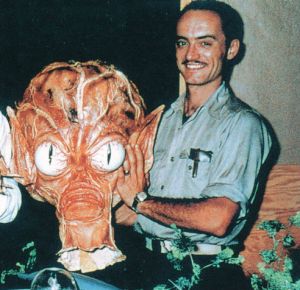
Paul Blaisdell
Born July 21st, 1927, Died July 10th, 1983
Any fans of the monster movies of the ’50s have probably seen the work of Paul Blaisdell. He was the man responsible for creating the monsters and creatures for a lot of those early AIP films, usually done with very little time and even less money. But he always came up with some unique and very memorable designs. He started his career after graduating from the New England School of Art and Design, and started to work for Douglas Aircraft as a technical illustrator. He would also send in his drawings to sci-fi fantasy publications like Spaceways and Otherwords. His work was noticed by a very important figure in the horror / sci-fi genre fandom, that of Forrest J. Ackerman. He became Blaisdell’s agent and introduced him into the world of movie making.
Blaisdell would go on to create some of the most memorable monsters from that era, in films like The Beast with a Million Eyes (1955), The She-Creature (1956), It Conquered the World (1957), Invasion of the Saucer Men (1957), and many more. In the early ’60s, he even started his own magazine called Fantastic Monsters of the Film, with Bob Burns. Unfortunately, the magazine was short lived.
With all of his creations being still remembered today by dedicated fans, it’s a shame that Blaisdell still does not receive the recognition that he should. So let’s change that. If you’re not familiar with him or his work, look some of his films up and take a look at the fun stuff he was coming up with, just with a few dollars and a lot of creative talent. I think you’ll enjoy what you see.
Reynold Brown Born Oct. 18th, 1917 – Died Aug. 24th, 1991
You probably have never heard of the name Reynold Brown, which is a tragedy. This man’s work is recognized by millions of film fans, but sadly they don’t even realize who Brown was. In the years before the internet, if there is one job in the movie business that is probably responsible for getting to people to come to the movies, it was the artists creating the movie poster. This was what the future audience was going to look at and decide that they had to come back next week to see that movie, so the image had to jump out at them and draw them in immediately. And one of these guys responsible for that in the ’50s through the ’60s, was Reynold Brown.
Between 1951 and 1970, he created somewhere between 250 and 275 movie posters. And a LOT of them, I guarantee that you’ve seen before. Titles like Creature from the Black Lagoon, Revenge of the Creature, Tarantula, This Island Earth, I Was a Teenage Werewolf, Attack of the 50 Foot Woman, or even The Deadly Mantis. Each one of these pieces truly is a work of incredible art. Not only just recreating a giant monster on the poster, but creating a story right there in one lookBeing left-handed, at a time when that wasn’t ‘normal’, his grammar school teachers forced him to write “properly” with his right hand. Of course, he still used his left hand to doodle and draw. And that he did. He continued to draw all through high school, even getting a scholarship for an art school, but couldn’t go because of the death of his father. But he still continued to work on his talent, eventually working on a comic strip called Tailspin Tommy. After the advice of one of his heroes, Norman Rockwell, he got a job as an illustrator at North American Aviation, doing technical illustrations for service manuals. He eventually worked as a freelance illustrated for years, eventually getting a teaching job as Art Center College, which he did for 26 years.
In 1951, he did his first movie poster, for the film The World in His Arms. Some of his posters are iconic and ones that we’ve been seeing for years. So Reynold Brown is a name that needs to be remembered for his work in this field, and for creating such incredible works of art, making us want to see those movies over and over again. The sad part is that there were times that Brown, and a lot of other movie poster artists, were not allowed to sign their names on the artwork. That is a real tragedy.
Check out the official website by clicking HERE. There was also a documentary on him made in 1994 called The Man Who Drew Bug-Eyed Monsters, which is available to watch on YouTube. Below is part one, then you should be able to see the links for the other three parts. It definitely is worth a watch.
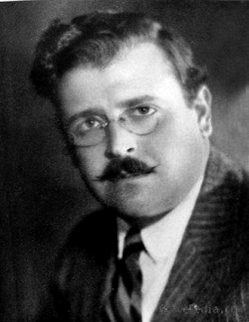
Erle C. Kenton Born Aug. 1st, 1896 – Died Jan. 28th, 1980
While Kenton didn’t make but 4 horror movies in his career, the ones he did do are pretty important. He started as an actor, but took any job in the industry to learn as much as he could. Then in 1919, he got to direct his first picture. In his career, he directed 131 films, sometimes making over 10 pictures a year. In 1924, he directed a total of 15 films. Pretty funny when you compare it to today’s working directors and how often they turn out films.
Kenton was mainly known for directing comedies, even doing a couple for Abbott & Costello. But his first entry in the horror genre was in 1932, which is probably his best, the classic Island of Lost Souls (though author H.G. Wells would probably argue that point). Kind of strange that a man known for comedies could turn out a dark film like this one. Sure, some say that Laughton’s over-acting makes it a dark comedy, though I’ve always found this film pretty disturbing and quite effective.
His remaining efforts might not be as good, but are not only entertaining, but staples in the genre. With The Ghost of Frankenstein (1942), House of Frankenstein (1944), and House of Dracula (1945), he helped continue the Universal monster series with some entertaining films. Sure, they weren’t the same classics that James Whale had turned out, but us monster kids just ate them up. And even today, as dated as they might be, I still find them pretty entertaining, as do many other classic monster fans.
Lionel Atwill Born: Mar. 1st, 1885 Died: Apr. 22nd, 1946
If you are a fan of the old Universal classics, then you’ve seen Lionel Atwill. But it seems that younger fans today might now know him other than “that guy from the Universal films”. It’s really unfortunate too since Atwill was wonderfully talented at playing intelligent and authoritative figures. Granted, some of them were mad as a hatter, but that’s beside the point. Then again, that is where he seemed to excel!
Atwill could carry the lead in films, such as the original Mystery of the Wax Museum and The Vampire Bat (both 1933), but could also make the same impact when he was playing supporting roles in films like Man Made Monster (1941) or Son of Frankenstein (1939). He was always memorable with his distinct voice and glare, always leaving an impression. My first issue of Famous Monsters magazine featured an article on Man Made Monster, which to this day, remains one of my favorites. Same goes for The Ghost of Frankenstein, that I can still remember watching for the first time on a small 13″ black and white TV and enjoying the hell out of it. And Atwill is one of the reasons on both those examples.
In the early 40’s, he was sentenced to 5 years probation after being found guilty of perjury in a case about a young girl who had been raped at a “wild sex-party”, which was claimed to be at Atwill’s home. He testified that it was not true, which was found to be a lie after others testified. While he did work a little after this scandal, his career was pretty much done. I’m sure there is a lot more to that story as to what really happened, but I’m not sure we’ll ever really know. But he should at least be remembered for the fine work that he did give us.
For a great biography of Atwill, check out Hollywood’s Maddest Doctors, by Gregory William Mank.
George Bau
Born Dec. 22nd, 1905, Died in March of 1974
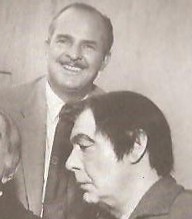
Bau is another name in the movie industry that is pretty much an unknown, which is a damn shame, since if it wasn’t for people like him, we might not have had some of the incredible fantastic cinema that we have today. Back in the late ’30s, Bau was developing and creating new types of make ups, such as foam latex, that would be still used to this day. The stuff that he was inventing at the time was used by Perc Westmore on the film The Hunchback of Notre Dame (1939), allowing them to do wonders with Charles Laughton’s makeup. Bau also developed the first plastic bald cap, a method to preserve plaster molds so they could be used more than once, the pressure injection method of inserting foam latex into large size molds, and many more. I’m not trying to take anything away from modern day makeup artists, but these guys back in the beginning of cinematic makeup effects had to create their own methods and ways of making these effects work.
He worked on films such as Arsenic and Old Lace (1944), House of Wax (1953), and even Frankenstein 1970 (1958) to name a few. But without his discoveries and the inventions that he created, the world of monsters might not have looked as good as they did then, or do now. And for that reason alone, he needs to be remembered, and respected.
Roy Ward Baker Born Dec. 19th, 1916 – Died Oct. 5th, 2010
Fans of British horror films of the ’70s will probably know this man, since between working with Hammer and Amicus, he was cranking out some entertaining films in a very short time. Starting his career at the bottom and working his way up, even as an assistant director on Alfred Hitchcock’s The Lady Vanishes (1938), he eventually became a director. He hit some critical fame with A Night to Remember (1958), a film about the Titanic, which is still regarded as one of the best films on that subject. His first film for Hammer was the 3rd of their Quatermass series, Quatermass and the Pit (1967). Then in 1970, he made a huge hit with horror fans with The Vampire Lovers (1970), starring the lovely Ingrid Pitt. After that, he continued working with both Hammer and Amicus turning out great films, like Scars of Dracula (1970), Dr. Jekyll & Sister Hyde (1971), Asylum (1972), The Vault of Horror (1973), And Now the Screaming Starts (1973), and even The Legend of the 7 Golden Vampires (1974).
Baker’s films were simple. They had all the elements to make a great movie, which is what he continually turned out. He has quite a few films in his filmography that some critics might consider cheesy or even bad, but I think horror fans might just call classics, or at the very least, pretty damn entertaining. And after all, isn’t that what it’s all about?
Roy Ashton Born April 16th, 1909 – Died Jan. 10th, 1995
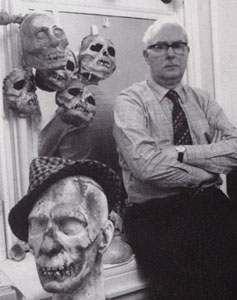
You cannot be even the slightest fan of Hammer Films and not have seen the work of Roy Ashton. He started as an assistant makeup artist back in the ’30s, before starting to work with Hammer Studios, where he created some of their most memorable monsters. But Ashton wasn’t just a makeup man, he almost had a career as a musician and opera singer. But the hours of devotion needed to learn the makeup craft pulled him away from his true love of music. He was the assistant makeup man to Phil Leaky for Hammer, who was the man behind the Quatermass films and Curse of Frankenstein. After Leaky and Hammer had a falling out, Ashton became their head makeup man. He created the look for their films like Curse of the Werewolf, The Reptile, Plague of the Zombies, as well as doing Peter Cushing’s zombie makeup for Amicus’ Tales from the Crypt.
It is a real shame that his name is not as common as Rick Baker or Tom Savini, since his work is still watched and enjoyed today by countless horror fans. But hopefully we can do our little part and hopefully change that. For more information on Ashton, there is an excellent book on him called Greasepaint and Gore, which is filled with great stories and plenty of artwork and photos of his work.
Richard Jaeckel Born Oct. 10th, 1926 – Died June 14th, 1997
Jaeckel is one of those actors that you’ve seem to have seen in tons of stuff. Mainly because he has appeared in a lot of both movies and television. And he has “one of those faces” as they say, that seems very familiar. He played in a lot of westerns and military movies, such as The Dirty Dozen. So when you do see him on the screen, it is usually followed by “Hey…it’s THAT guy!”
For us horror fans, Jaeckel has appeared in more than a few classics, such as in William Grefe’s Mako: The Jaws of Death (1976), where he using a shark to kill his enemies. He also appeared in two different William Girdler films, the bad smelling character in Grizzly (1976) that is trying to convince people just what they are up against, as well as in The Day of the Animals (1977). No matter what role he appeared in, Jaeckel always turned in a great performance and always kept your attention.
But for me, the best film he appeared in…or my favorite film of is, was actually his first real foray in to the horror genre. And that was with the 1968 Japanese film The Green Slime. Sure, it’s cheesy. But damn is it entertaining.

 Julia Saly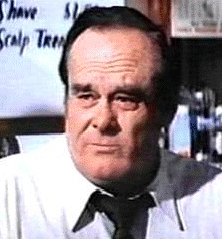
 Paul Blaisdell
 Reynold Brown
 Erle C. Kenton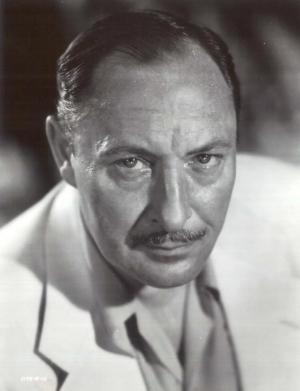
 George Bau
 Roy Ward Baker
 Roy Ashton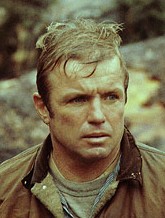
 kitleyskrypt.com