Horror History: Robert L. Lippert

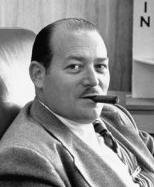
lippertRobert L. Lippert
Born Mar. 31st, 1909 – Died Nov. 16th, 1976

If you are a fan of cheap sci-fi/horror films of the ’50s and ’60s, then you’ll probably are familiar with the name of Robert L. Lippert. He is the man was named the “Quickie King” by Time Magazine due to his ability to crank out movies cheap and fast. Sure, they might not have been top-notch films, but they were usually entertaining. He was also the one that started to bring The Fly to the screen in 1958, before it was pretty much taken over by the studio and kicked him to the curb. But he still brought us fun titles like Rocketship X-M (1950) as well as Witchcraft (1964), The Last Man on Earth (1964), The Earth Dies Screaming (1964), and Curse of the Fly (1965).

Lippert had started in the film business working in a theater, starting his way at the bottom and moving his way up. He eventually owned a chain of theaters in California and Oregon. In the late ’40s, he figured out the easiest way to get movies to show in his theaters were to make them himself. He was also reported to be the man responsible for bringing popcorn machines into the theaters!
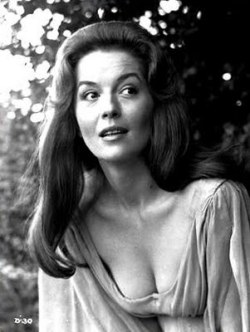
Horror History: Barbara Shelley

barbarashelley1Barbara Shelley
Born Aug. 15th, 1933

Barbara Shelley was a staple in the British horror cinema for about 10 years, starting in the late ’50s. The fact that she only made a handful of horror pictures during that time, and is so remembered shows the real talent that she was.

Starting with films like Cat Girl (1957) and Blood of the Vampire (1958), before appearing in one of the genre classics, Village of the Damned (1960). Then she would work with Hammer Films on her next four pictures, which shows some of her best work: The Gorgon (1964), Dracula: Prince of Darkness (1966), Rasputin: The Mad Monk (1966), and Quatermass and the Pit (1967). Her performance in Dracula: Prince of Darkness, as the uptight Helen, once transformed into a vampire is one of the highlights of that film. Her last role for the genre was the 1974 film Ghost Story (aka Madhouse Mansion), and moved to working more in television, even having a small stint in the Doctor Who series.

So the next time you’re in the mood for a British horror film, and maybe even a Hammer Film, think about choosing one of the ones that feature the lovely Shelley and see just what she gave to the genre.

Horror History: Michael Pataki

michaelpataki1.Michael Pataki
Born Jan. 16th, 1938 – Died April 16th, 2010

Pataki is one of those actors that you have seen a million times, in countless movies in just about every genre out there. He was everything from Drago’s coach in Rocky 4 to doing voices for cartoons like Mighty Mouse and Rin & Stimpy. He was in so many television shows it would take days to go over them. Working in the business for over 50 years, usually playing the villain, it was something he seemed to excel in.

But for us horror fans, he really was everywhere. He played the title bloodsucker in Grave of the Vampire (1974), or the mean sheriff in The Bat People (1974), or other titles like Dracula’s Dog (1978), Graduation Day (1981), Dead & Buried (1981), and the list goes on and on. He even tried his hand at directing a few times, with Mansion of the Damned (1976) being his directorial debut, starring a young Lance Henriksen.

So the next time you’re watching a low budget horror film from the ’70s, don’t be too surprised if you see Pataki’s name pop up on the credits, or you see his mug in there somewhere. No matter how big or small the movie or the role, he always gave a great and memorable performance.

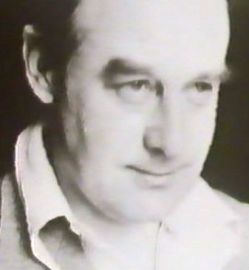
Horror History: Bernard Robinson

Bernard RobinsonBernard Robinson
Born July 28th, 1912 – Died Mar. 2nd, 1970

If you are a fan of Hammer Films, then you are a fan of Robinson’s work, even if you don’t realize it. Robinson was the art director and later production designer that worked on good number of their films, from Quatermass 2 (1957) to Frankenstein Must Be Destroyed (1969). The first actual film that he worked on was as an art director on The Case of the Frightened Lady (1938). Over those early years, he became good friends with Tony Keys, who would later invite Robinson to come work for Hammer.

Robinson could not only create unbelievable sets out of very little money, he also designed sets that could be used over and over again but moving things around and a little re-dressing. In fact, he was a master of his. Director Terence Fisher had stated that with one of Robinson’s sets, he could point the camera anywhere and he knew it would look fantastic.

Continue reading

Horror History: Yvette Vickers

Yvette Vickers1Yvette Vickers
Born Aug. 26th, 1928 – Died 2010

As movie fans, especially when you are fans of the older black and white classics, we know that time catches up with the stars of these titles a lot sooner than we expect. A lot of the talent from those films in the ’50s and ’60s have long gone the way of becoming ghosts of Hollywood. But we know fans like us keep them alive in spirt, as well as in film. But there are some deaths that are so tragic, that it is just terrible. Yvette Vickers is one of them.

She started her career in the famous 1950’s film Sunset Boulevard, as “giggling girl on phone at party”. She would in little bit parts here and there, such as Reform School Girls (1957) and Short Cut to Hell (1957), which was James Cagney’s only film as a director. But her career never took off big, even after appearing in Playboy as a Playmate in 1959. Director Russ Meyer was actually the photographer for that layout. Her real claim to movie fame is for appearing in two horror classics, Attack of the 50 Foot Woman (1958) Attack of the Giant Leeches (1959).

Continue reading

Horror History: John L. Balderston

johnlbalderstonJohn L. Balderston
Born Oct. 22nd, 1889 – Died Mar. 8th, 1954

Ever wonder why the original ’30s film versions of Dracula and Frankenstein didn’t seem to follow the novels too much? Well, one of the men responsible for that was writer John L. Balderston. He started his career as a journalist, even before he finished school, working for different newspapers. He would even be a war correspondent during WWI. He eventually started in show business as a playwright, while continuing the journalism gigs as well.

In 1927, he was hired to re-write Hamilton Deane’s stage play of Dracula for American audiences, making more than a few changes. Because of its huge success, he was then hired to do the same for Peggy Webling’s play version of Frankenstein. He would later have his name attached to many of the early monster classics, even if his scripts were never used. But because of his work, a lot of the foundation of these early monster flicks were due to him.

In 1953, Balderston and the heirs of Webling won a lawsuit with Universal, getting paid not only $20,000 but also 1% of any of the films that resulted from their work, including any sequels!

Horror History: Sheila Keith

Sheila KeithSheila Keith
Born June 9th, 1920 – Died Oct. 14th, 2004

If you’ve seen more than a couple Pete Walker films, then you probably know who Sheila Keith is, or at least have seen her. And you’ve seen her work in his films, then you are definitely going to remember her! Keith was this wonderful older lady who seemed to excel in playing twisted and demented characters, even if she looked like your friendly old grandmother. While she did work a lot in other smaller roles and in a few TV series, it is her work with Walker that us deviant horror fans remember and love her for.

In Walker’s Frightmare aka Cover Up (1974), which happens to be my favorite role of hers, where she plays a cannibalistic matriarch, with such zest and conviction, that she is one of the scariest women you’d ever want to come across. She also appeared in Walker’s House of Whipcord (1974), The Confessional aka House of Mortal Sin (1976), The Comeback (1978), and House of Long Shadows (1983), where she worked alongside the likes of Carradine, Cushing, Lee, and Price!

Keith’s performances were always so strong and powerful that it amazes me that she did not get a ton of work in other movies. Maybe it was because Walker’s films didn’t receive a lot of critical acclaim.

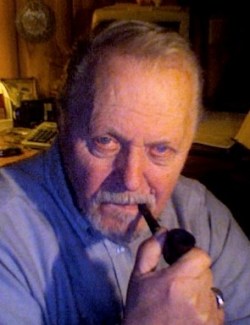
Horror History: Bill Rebane

rebaneBill Rebane
Born Feb. 8th, 1937

If you’ve heard of Bill Rebane, it is probably due to his movie 1975 epic The Giant Spider Invasion. But that is a good start if you haven’t heard of him. Rebane made quite a few lower budgeted films, all made in Wisconsin, usually at his Shooting Ranch Studio, a full fledge film production studio that not only made several feature films, but tons of commercials, industrial films, and much more.

Rebane arrived in the US in 1952 at the age of 15, coming from Estonia. While he speaks 5 languages, he learned to master the English language by watching American movies, which helped fuel his love for the cinema. He started his media career at WGN-TV in Chicago, working his way up from the mailroom to eventually executive producer.

In the late ’60s, he started his film ranch in Wisconsin which would be the first full-time feature film studio in the Midwest, which ran for over 30 years. During those years, he made such films as Rana: The Legend of Shadow Lake (1975), The Alpha Incident (1978), The Capture of Bigfoot (1979), and The Demons of Ludlow (1983), and even a few more.

While his films might not be the best made films, they are usually entertaining, even if in a MST3K sort of way. And he made the most entertaining giant spider movie ever made! So for that fact alone, everyone should know and remember who Bill Rebane is.

Horror History: Les Tremayne

tremayneLes Tremayne
Born Apr. 16th, 1913 – Died Dec. 19th, 2003

Here is an actor that was more famous for his voice than his face. In fact, along with Bing Crosby and President Franklin D. Roosevelt, he was one of the most distinctive voices on American radio. Born in England but moving to the states when he was only 4, it didn’t take long for him to develop his voice. By the age of 17, he was already working in radio. During the ’30s and ’40s, you could hear Tremayne’s voice on as many as 45 shows a week. He also appeared in countless TV shows over his career, from soap operas to westerns to thrillers and everything in between, including the role as the Mentor in the TV show Shazam!

But cult movie fans will recognize him for his roles in films like War of the Worlds (1956), The Monolith Monsters (1957), The Monster of Piedras Blancas (1959), and The Angry Red Planet (1959). For real fans of the cheesy classics, he also appeared in The Slime People (1963) and in Larry Buchanan’s Creature of Destruction (1967), and the killer snake movie Holy Wednesday aka Snakes (1974).

With a very distinct voice, Tremayne will always be remembered to cult film fans like us, always giving it all, never winking at the camera, and always entertaining the audience.

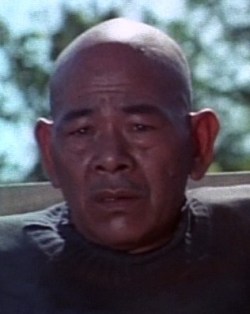
Horror History: Bruno Punzalan

punzalanBruno Punzalan

Trying to find any information on this actor from the Philippines is damn difficult. But since his face was a staple of movies in the ’60s and ’70s that were filmed there, I thought a little attention needed to put in his direction. If you’ve seen any of the famous Blood Island Trilogy, Brides of Blood (1968), Mad Doctor of Blood Island (1968), and Beast of Blood (1971), then you’ve seen Punzalan. He is usually cast as a bad guy, usually a thug of whoever is in charge. He had a very distinct face that always made him easy to pic out in the casts. He worked many times with director Eddie Romero, as well as with actors Sid Haig and Vic Diaz (another staple of Pilipino movies).

While not much is known about this actor, we feel that because of his contributions to the horror genre, we think that people should at least know who he is. So when they see that same face again, they can say “Hey…that’s Bruno Punzalan!”, impressing everyone around them. Not to mention, keeping this actor’s memory alive.

He also appeared with Ingrid Pitt in The Omegans (1968), as well as Blood Thirst (1971), Black Mama, White Mama (1973), and Savage Sisters (1973).