
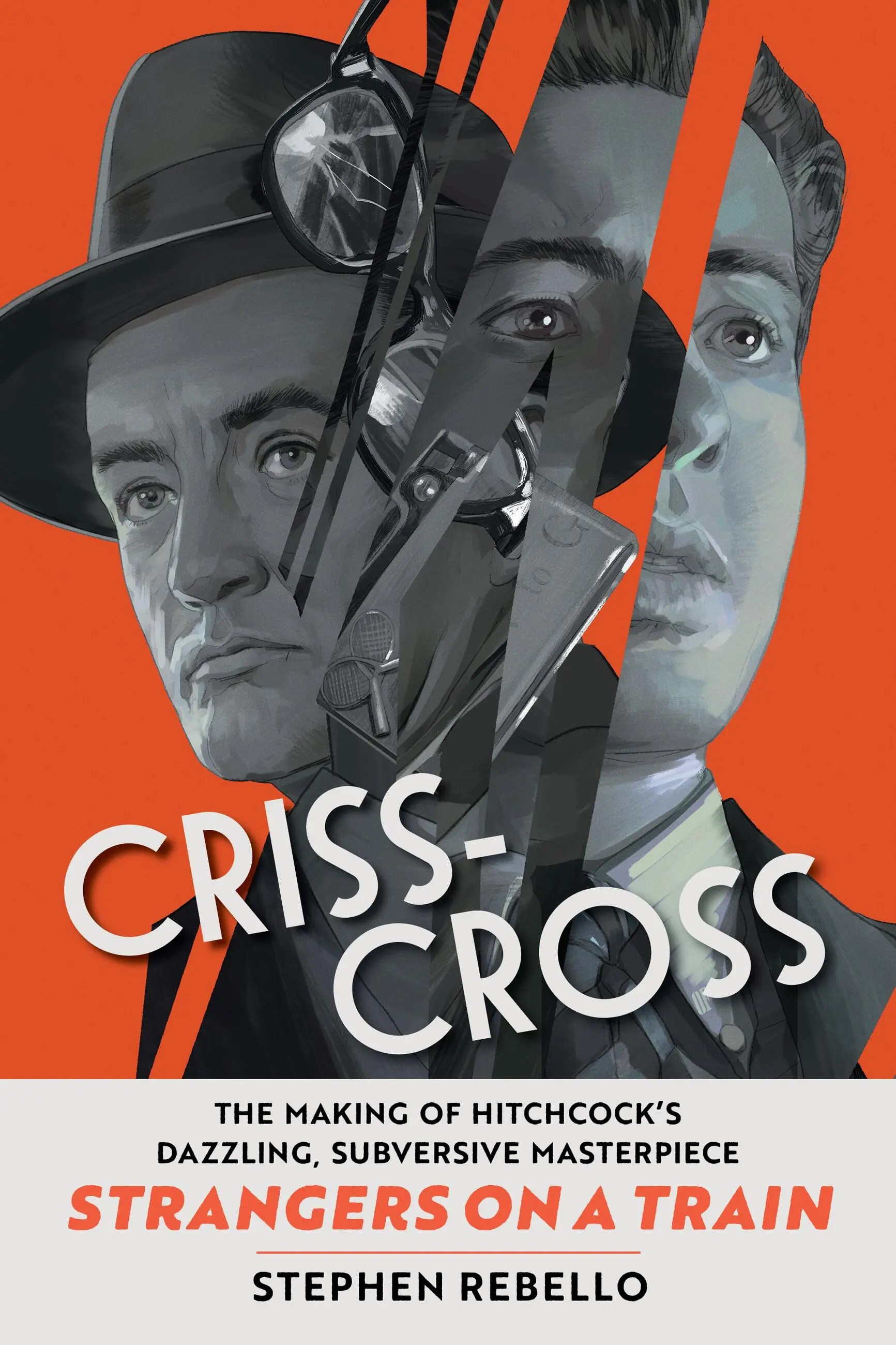
Criss-Cross: The Making of Hitchcock’s Dazzling, Subversive Masterpiece Strangers on a Train
Published by Running Press, 2025. 312 pages.
By Stephen Rebello
I don’t remember when I first watched Strangers on a Train, but the first time I saw clips of it (even though not knowing where it was from) was in the film Terror in the Aisles (1984), a compilation of scenes from different horror films, as well as some from the suspense sub-genre. For Strangers, it’s the scene at the carnival, where Robert Walker pops the kid’s balloon, and then strangles Laura Elliott. At the time, I didn’t even know it was a Hitchcock title. But when I finally got around to watching the entire film, it became one of my favorites of Hitchcock.
I was thrilled to see a book out on this film especially since it was written by Rebello, who had previously written about Hitchcock and the making of Psycho. Anytime I’ve read about a particular movie, or director, or anything in general about a film, I always come out of it learning something new as well as seeing the film a little different. Anytime you learn more about what exactly went into the making of one, from the casting, the set design, cinematography, it makes you see more but gives you more appreciation of it. But in the case of something from Hitchcock, it goes even further than that, when you come to understand what was going on in his mind during the making of one of his movies.
There’s no doubt Hitchcock was demanding of his cast and crew, making sure the film looked exactly the way he wanted it. That’s mainly because he already knew what the film was going to look like, from what the characters were wearing, to how each scene was to be shot, to how the locations were going to look. It’s all in the details. During the scene where the character of Burno is trying to retrieve the lighter from a storm drain, Hitchcock told the art department exactly what debris would be in there.
One of the things I learned from this book is that while Hitchcock knew what he wanted, he wasn’t against a new idea. While he would have storyboards of what was going to be shot each day, if someone else came up with something different, Hitchcock would draw it out and see if it worked. If it did, then he’d go along with it. It didn’t always have to be his way.
You’ll get to see Hitchcock’s amount of detail of what he wanted and how it should look. A perfect example is the carousel sequence at the end of the film, with how it would be shot, the way it would cut back and forth, all planned out in his head. While I’m a big fan of Hitchcock’s work, I’m still a novice when it comes to how great of a filmmaker he was. Books like this help me along that path, always helping me not only to see something I didn’t catch before, but also to really enjoy the film even more. And I love the fact that Rebello took the time and effort to write about a film that is one of my favorites.
 kitleyskrypt.com