
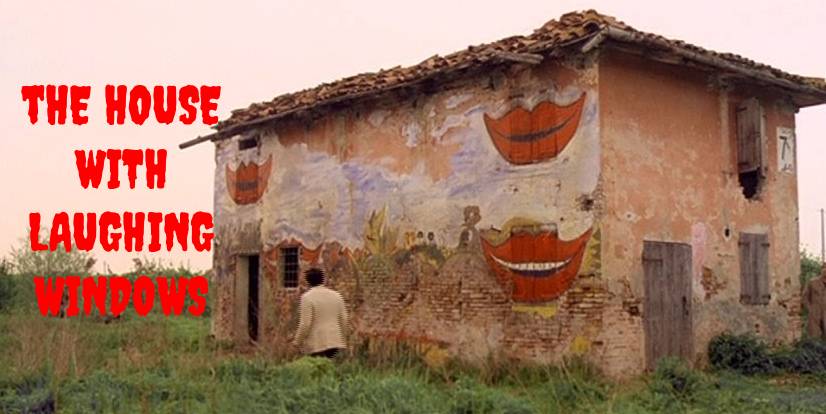
(1976)
Directed by Pupi Avati
Starring Lino Capolicchio, Francesca Marciano, Gianni Cavina, Guilio Pizzirani, Bob Tonelli, Vanna Busoni, Pietro Brambilla, Andrea Matteuzzi, Pina Borione, Eugene Walter
You’ll often read that this film is considered a giallo, the same genre that would include Mario Bava’s Blood and Black Lace and Dario Argento’s Deep Red. And if you try and compare House to those two, you might have trouble seeing many similarities. Upon my first viewing, I agreed completely with that statement, even while discussing it on a podcast I was on a few years ago. But that shows a few things. First of all, it shows how open the parameters of the giallo sub-genre really are, and secondly, and more importantly, how one’s thoughts and opinions of a picture can evolve. When you compare House with something like Lucio Fulci’s Don’t Torture a Duckling (1972), which is also a giallo, then you can see it having more of a connection. That’s the beauty of different sub-genres, and film in general, isn’t it? They are so subjective and always open for different or possible interpretation. And for this one, it’s definitely one of those.
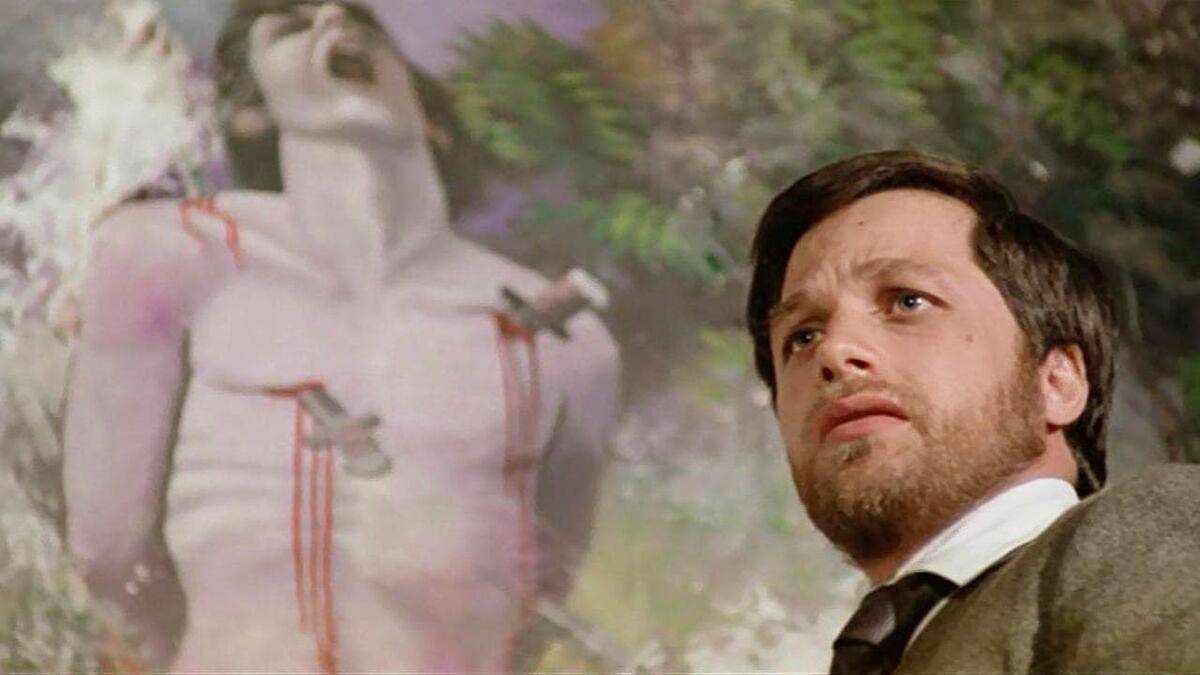
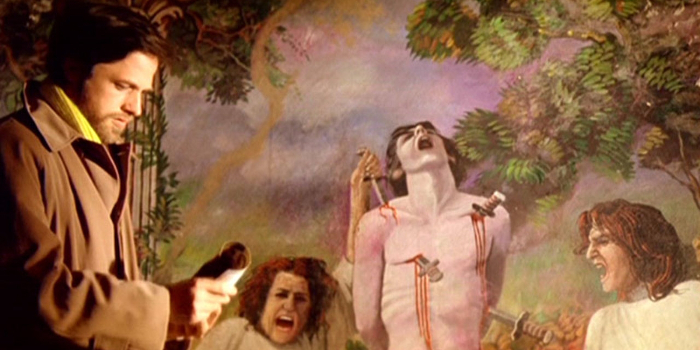
Right from the opening credits, where we get to see a man getting stabbed multiple times by two characters as his hands are tied above him. It’s all done in slow motion, and over the screams, we hear a recorded voice, almost like reading a poem, about agony, and cruel excitement. It’s one way to grab the attention of the viewer right from the beginning.
The plot is about an art restorer, Stefano, who is hired to restore an old painting that is located inside the local church, in a small village outside of Ferrara, Italy. It’s a painting from artist Buono Legnani, known as “the painter of agony”, who disappeared years ago and thought to be dead, but his body was never found. The mayor who hired him is hoping the painting will become sort of a tourist attraction. The church where the painting is located had been there long before, used as a storage for corpses by the Nazis during WWII. But as Stefano proceeds to uncover the painting, he also starts to uncover the mystery around it, around Legnani, and even the little village.
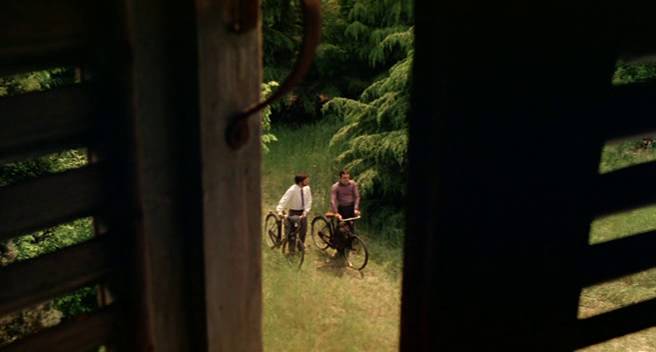
With Stefano now wanting to solve this strange puzzle, and the proceeding events that happen, is our first connections to the giallo. Our “detective” is not with the police or even an investigator, but someone just stumbles upon this mystery and is determined to uncover the truth. He soon realizes that there are ones in the village that seem friendly enough at first but seem to still be hiding something. He’s told he has to move out of the hotel because of a huge group of tourists coming, even though nobody ever shows up. That kind of strangeness continues.
A friend and colleague, Antonio, who recommended Stefano for the job, wants to give him some secret information later that night, but dies under what Stefano thinks is very mysterious circumstances. Everyone else simply thinks it was suicide, but Stefano doesn’t buy it, which makes him want to uncover the truth even more.
The film has a lot of strange characters, from a couple of way different type of schoolteachers, a strange priest, the weird young man who works at the church, to plenty of the villagers who always seem to know more than what they are saying. But as Stefano discovers more and more, he realizes his life just might be in danger as well.
This is not a film for those looking for a traditional giallo, such as the work of Argento or Martino. Unlike your normal giallo, there is barely any nudity on display, no black glove killer, no bottle of J&B, but yet there are plenty of some really interesting shots, and a really interesting mystery to be solved. That mystery even continues even after the ending credits start, leaving questions on the viewer’s mind. But what director Avati does give us is an incredibly fascinating story that is quite different from most films of that era.
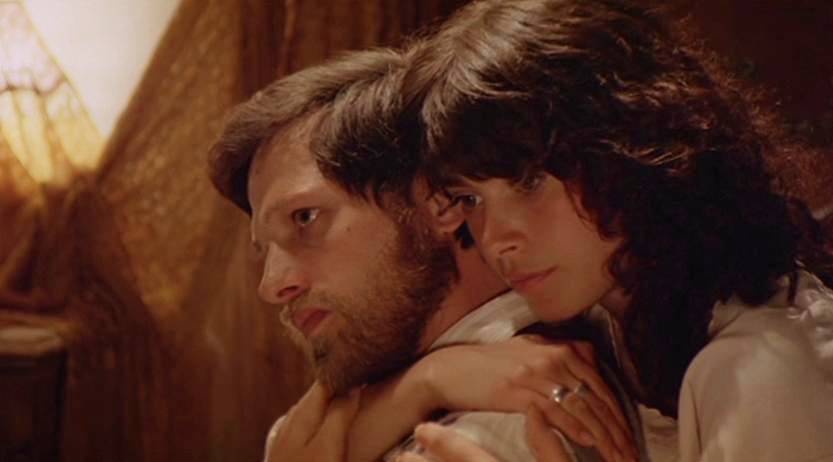
Arrow Video is releasing this on 4K special edition that just looks incredible. While the print is amazing and will give your eyes a visual treat, both in admiration as well as haunting, it is the extras included on this release that will give your brain a treat, with plenty of things to help make you think. There are two different commentaries, both very different in context and information. The first one is with writers, critics, and film historians Alexandra Heller-Nicholas and Josh Nelson. They delve into a lot of the film’s history as well as its connection to history itself, such as Italy and WWII. While some might think it’s a lot of deeper meanings that they consider to be in there, while others might not agree, thinking it’s more their ideas than the filmmakers. But you know what… who cares. I found it very interesting to listen to, and while I might not immediately agree with their thoughts and opinions, I enjoyed pondering them.
The other commentary is by Troy Howarth and Eugenio Ercolani, who give more of a straightforward history of the film and those who worked on it. There’s a lot of history about director Avati and his work, as well as the different actors. I guarantee you will learn some bits of information about all of this that you did not know before! That is one of the reasons I enjoy both Howarth’s and Ercolani’s work. It is always fact-filled and yet still an enjoyment to hear or read when it comes to their books.
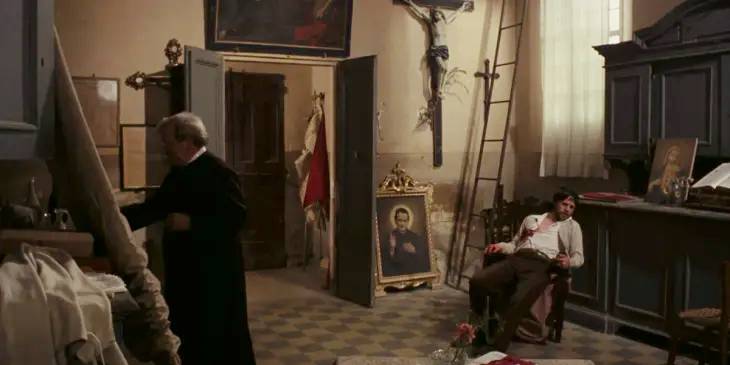
We also got two different visual essays about the film, one by Chris Alexander called La Casa e Sola, and one by Kat Ellinger called The Art of Suffering. These are only about 20 minutes long but again give the listener some new ideas and information to think about.
But one of the best things on this disc is the brand-new feature length documentary called Painted Screams, directed by Federico Caddeo, about the making of the movie. We get to hear from director Avati, his brother and co-writer Antonio Avati, assistant director Cesare Bastelli, actors Lino Capolicchio and Francesca Marciano, Pietro Brambilla, and Guilio Pizzirani. They all have some great stories about the making of it. I really enjoy hearing these reflections back on a project they all worked on film almost 50 years ago.
This film might not be for everyone, especially depending on how much you love Italian cinema. But if consider yourself pretty well-versed in it, then I think this release is a definite must.
 kitleyskrypt.com