
While it might have something to do with the fact that I’m an older horror fan, but there is something special about going back and watching the classic films from the beginning of the golden age of the horror film. And we’re all familiar with the Universal classics that really helped create that first big impact, but they weren’t the only studio trying to make their own footprint in that horror heritage. While they might not have made as big of a footprint, studios like Warner Bros. and MGM were making some serious efforts at the same time. And some of these definitely should be held up in the same respect as some of those Universal entries.
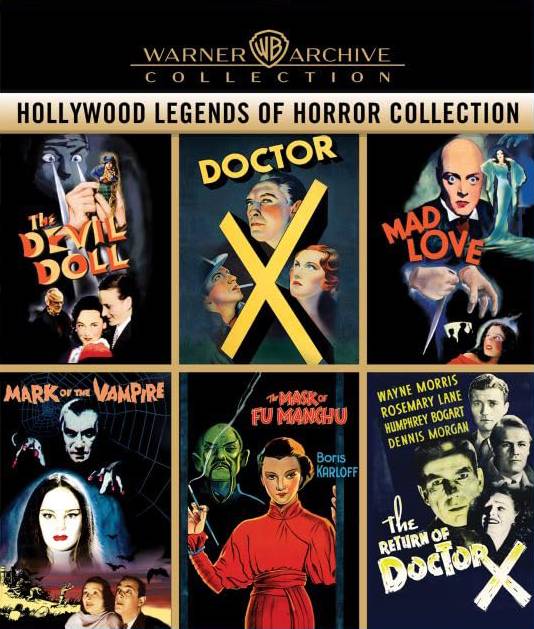
Thanks to Warner Archives you can add 6 of these titles to your collection, all in one set! They have released the Hollywood Legends of Horror Collection that features Blu-ray releases of the following films: Doctor X (1932), The Mask of Fu Manchu (1932), Mad Love (1935), Mark of the Vampire (1935), The Devil Doll (1936), and The Return of Doctor X (1939). The set retails for only $59.99, so that really is about $10 a title. But honestly, the films alone are must for any horror fans movie library.
Each film comes with audio commentaries by film scholars and more, giving a lot of insight into the films and production. There are also some cartoons on some of the discs, that I’m still trying to figure out why, but nonetheless, they are still fun to revisit. But let’s get to the films!
Doctor X (1932) is the oldest title in the set and was Warner Bros. second film to be shot with the Technicolor 2-strip “Process 3”, which resulted in a better color and clarity. I can remember first seeing this on VHS and it was more of a novelty than looking good. But seeing this Blu-ray, it really is impressive. The film features both the Technicolor version as well as the black and white version.

The film stars Lionel Atwill in his first major lead role, as Dr. Xavier who runs a facility of different medical scientist all working on great things for mankind. The problem there is also a killer on the loose in the area, that seems to have some surgical skill, which puts Xavier and his fellow doctors under the watch of the police. There’s even mention of cannibalism, which is pretty surprising for a film in 1932 to even mention that subject matter. While the film does have some of the usual silly humor in it, mainly used to balance out some of the more “intense” sequences, there is enough atmosphere and great performances here to make it an important part of horror history. Actress Fay Wray starts her role as a scream queen
The first of the only three horror films director Michael Curtiz would do, before moving on to bigger box office success with films like Yankee Doodle Dandy (1942) and White Christmas (1954).
This release comes with two different audio commentaries, one by Alan K. Rode, author of Michael Curtiz: A Life in Film, and Scott MacQueen, who producer and film historian. Both give so much information about the film itself, and with Rode knowing so much about director Curtiz, it gives us even more.
The Mask of Fu Manchu (1932), starring Boris Karloff in the title role is the next film, and honestly is one that needs to be seen, but not much after that. I’ll watch anything with Karloff in it, but this film is very dated in subject matter and the way certain races are treated. In fact, there is even a disclaimer in the beginning before the film actually starts. But it is a product of its time, so one can’t criticize it for that.
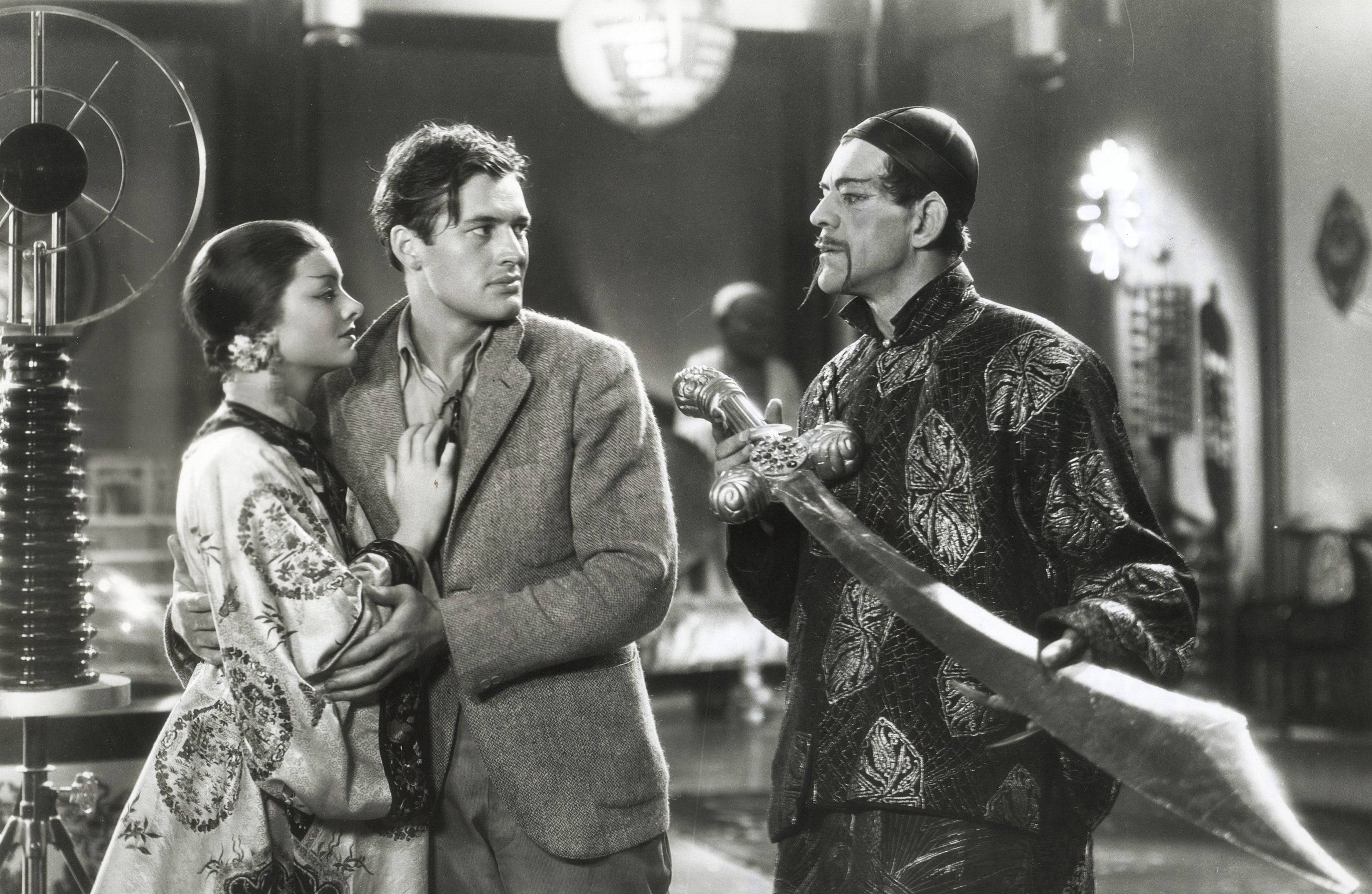
For the film itself, it’s not really horror, more of an adventure story, though the scenes of torture could elevate the horror aspects. Karloff does a great job, as he always does. But the story is a little lackluster and not much to keep a viewer entertained, or at least not this one.
Charles Vidor was hired as the director for this MGM film, but was fired after a few days, and Charles Brabin stepped in to direct. The story is about a bunch of English archeologists trying to uncover the sword and mask of Genghis Khan, before Fu Manchu gets it, since it could help him start a world-wide revolt against the white man. Again, nice to have in the collection, but not one to bust out too often to watch.
This has audio commentary by author and historian Greg Mank, who never ceases to fill the listener with a ton of information and great stories.
Mad Love (1935) might have been one of the titles that showed MGM just might be able to keep up with Universals films. Directed by famed cinematographer turned director, Karl Freund, and starring Peter Lorre in his very first American film, it deserves to be included in the old classic horror films of the 1930s.

Lorre plays the mad Dr. Gogal, who is obsessed with Frances Drake, who plays an actress appears in a Grand Guignol style stage plays. Colin Clive plays her husband, famous concert pianist, who has his hands permanently damaged in a massive train accident. Can Dr. Gogal save his hands? But what price will Drake have to pay? And just where did the new hands come from?
While Freund moved from cameraman to directing, he had Gregg Toland behind the camera, who would go on to be nominated 5 times for an Oscar for his work, winning for 1939’s Wuthering Heights.
This film comes with audio commentary by Dr. Steve Haberman, who is another one of these scholars who covers a lot of the older classic films, but really knows his stuff, and makes the commentaries interesting to listen to, while giving you a lot of good stuff about the film and those making it.
Mark of the Vampire (1935) is MGM’s attempt to remake their 1927 film London After Midnight, which starred Lon Chaney. Tod Browning, who directed the original, directs this version as well. This time out, it is Lionel Barrymore and Lionel Atwill as the two investigating the murder of Sir Karell Borotin, who seems to have died by a vampire bite! But could it be the strange vampire-like characters seen hanging about the castle?
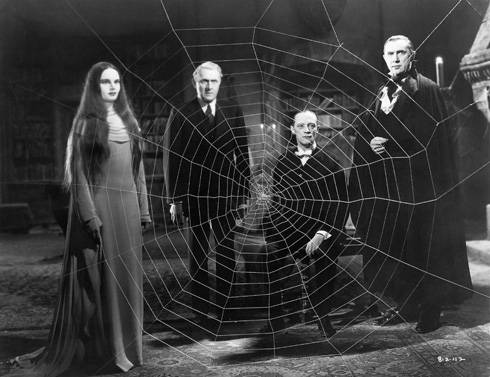
Lionel Barrymore is just so much fun to watch him chew the scenery every time he’s on screen. Atwill gives his usual commanding performance and just adds to the charm of the film. Bela Lugosi has an unusual role here, doing a splendid job, as does the young Carroll Boreland.
The commentary is by novelist and film historian Kim Newman and editor and writer Stephen Jones and having two “Brits” cover this American classic film is an interesting idea, but they still deliver the goods when it comes to the history and trivia.
The Devil Doll (1936) is yet another title from MGM and directed by Tod Browning and again starring Lionel Barrymore. This has him playing a wrongly convicted man who escapes prison to get his revenge. From the inmate he escaped with, he learns how to use “dolls” to enact his revenge. But at what cost? The effects do seem a bit dated, but with Barrymore playing a little old lady (which is so much fun) and the nostalgic factor, it’s a fun movie.

This one has audio commentary by Dr. Steve Haberman (though shows Bruce Haberman on the menu) and Constantine Nasr, who again give the listener so much information on the film. It’s almost like readying a book while watching the movie!
The Return of Doctor X (1939) is the last film on the set, this time from Warner Bros. I remember this film being lost for some time, and being the only horror film Humphrey Bogar made, it made me want to see it even more! Granted, once it did get a release, it didn’t make the impact on me I was hoping for! But either way, it fits perfectly into the films of this error.

Bogart plays a man who needs blood transfusions to keep him alive, but he is the “bad guy” or is it the doctor who made him that way? We do get the man lead, Wayne Morris, playing a newspaper man, who I find just an annoying as in the first Doctor X film, but that was just a way to help ease the tension from the more horrific elements. Speaking of Doctor X, this Return film has nothing to do with it, with a completely different story and characters.
The commentary is moderated in the beginning by Dr. Steve Haberman who is joined by director Vincent Sherman, who passed away back in 2006, so this isn’t a new recording but was one of my favorites on this set, because we’re actually hearing from the director! There is a lot of press about how much Bogart hated being on this film, but Sherman never mentions that, but states that Bogart, like himself and others that that time, when you signed on to do a job, you did it. This might not be everyone’s favorite, but I feel it still has its charm and is a fun watch.
 kitleyskrypt.com