
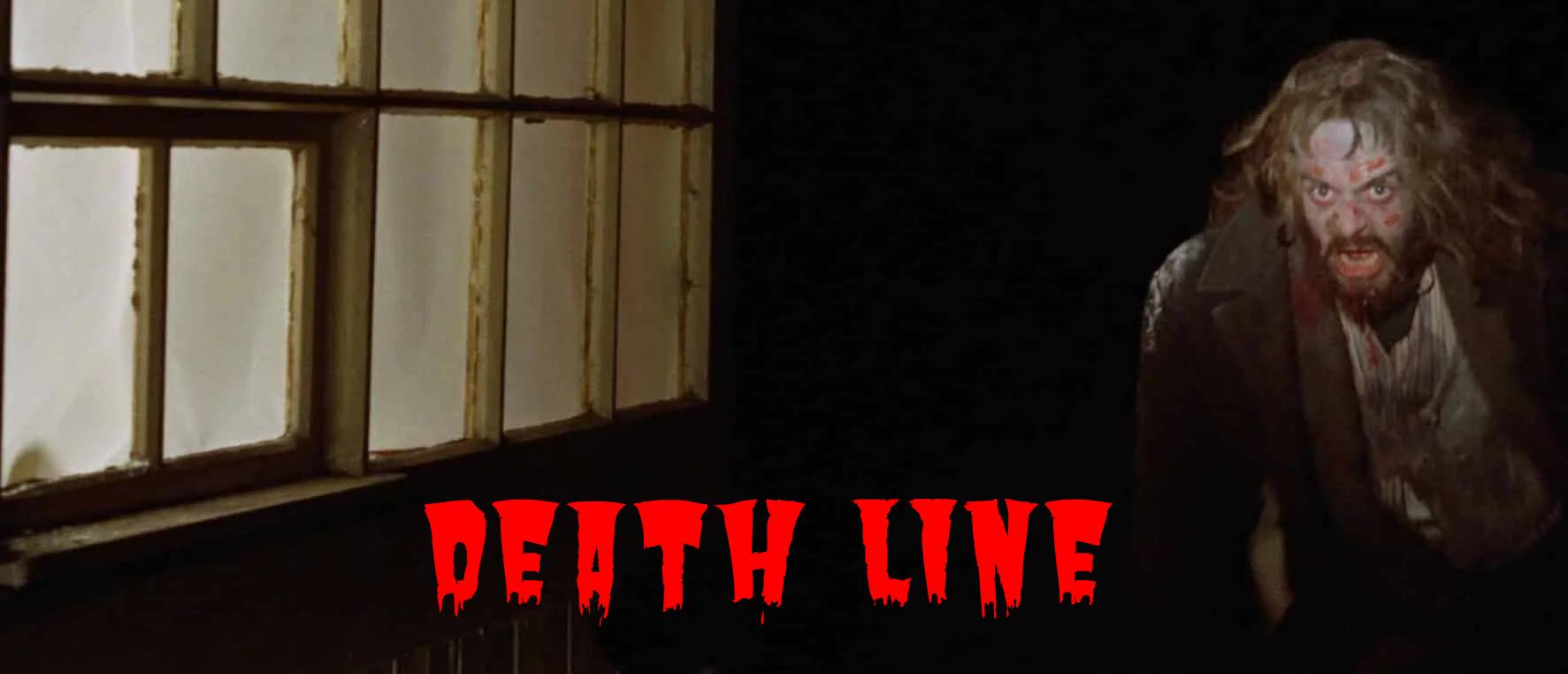
(1972)
Directed by Gary Sherman
Starring Donald Pleasence, David Ladd, Sharon Gurney, Clive Swift, Norman Rossington, Hugh Armstrong, June Turner, James Cossins, Christopher Lee
For the longest time, I always knew this film as Raw Meat, mainly due to the poster art that AIP used for it, which admittedly, was pretty cool looking. They knew a title like that would be much easier to sell than Death Line, which I have to I agree with. But for the film itself, Death Line fits a lot better, not to mention not misleading the audience as to what kind of film this is.

The story is a very simple one, but also a sad one. It starts with a middle-aged English gentleman, played wonderfully by the stellar character actor James Cossins, going down for a train ride, after hitting a bunch of the sleezy peep shows. But while waiting for the train, something attacks him. A young woman, Patricia, and her American boyfriend, Alex, come across the man lying on the stairs going up. Alex assumes he’s just passed out drunk, much like he’s used to seeing in the states. Patricia wants to help and thinks he might be seriously hurt. She convinces Alex to get a patrolman but when they return, the man is gone. They think nothing more about it, until the man, a well-establish member of Parliament, doesn’t show up for work. When the police question the young couple, they don’t really believe their story. But when the police discover a pattern of disappearances from that same platform, they start to investigate a little further, never expecting to discover the real horror that has been going on down there for decades and decades.
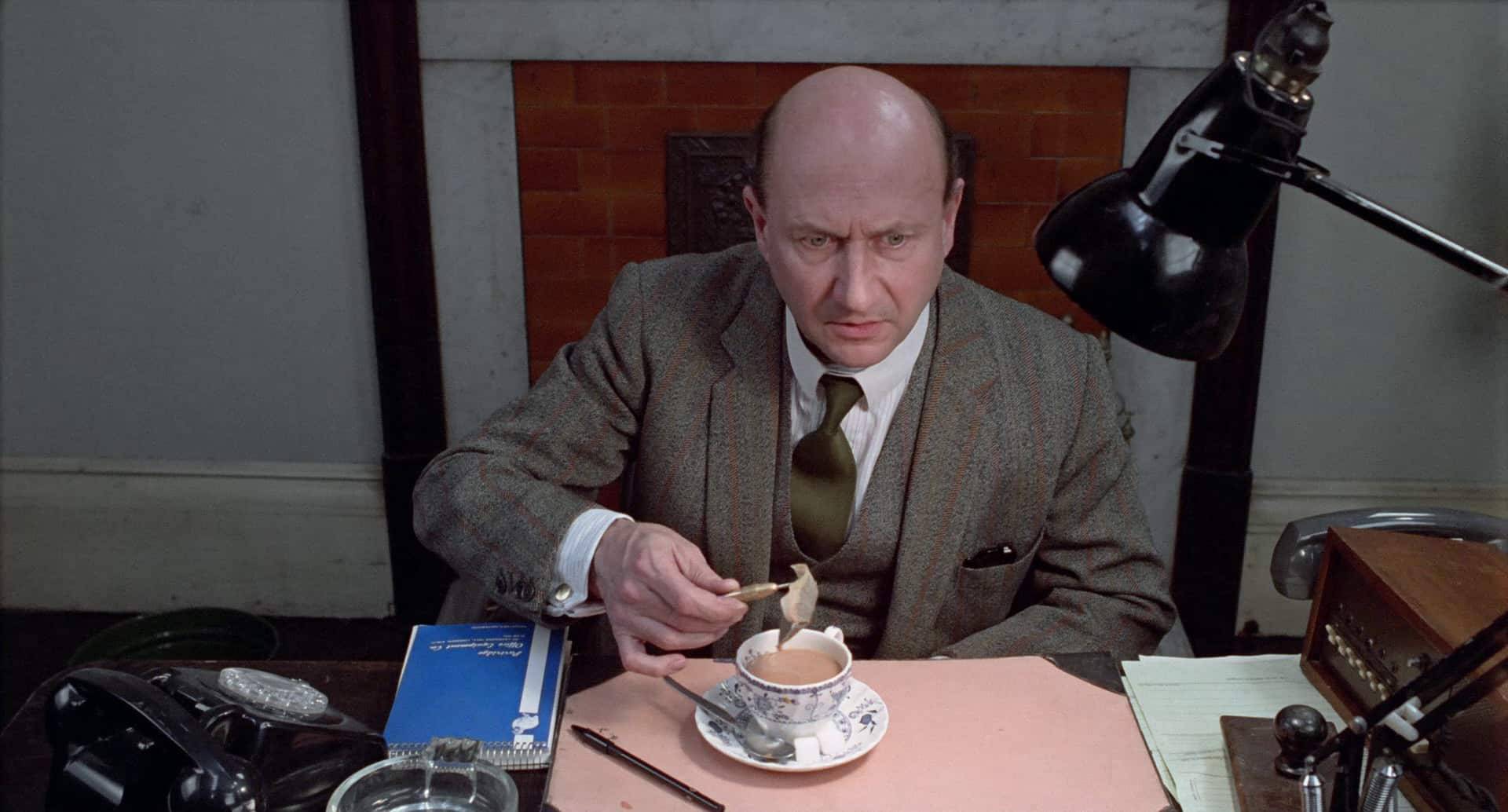
Donald Pleasence plays Inspector Calhoun, and pretty much steals every scene he is in. He is just a treat to watch, playing this inspector just an average bloke on the street. Known to like to steal scenes, Pleasence is a master of it, from constantly trying to pick out the tea bag from his cup with a throwing dart, taking the focus of the audience straight to him. Or how he moves about, his famous Pleasence stare, and of course, that voice. When he comes up against Christopher Lee, a member of MI5, who tells Pleasence to stop his investigating of James Manfred, the missing man from the train station, Pleasence gives him that working class smirk and slight attitude, not caring he’s outranked by a longshot.
Lee is only in that one scene, which he filmed in a few hours, but took the role because he wanted to work with Pleasence. Lee does play his character with a big smile but having that cocky, authoritarian attitude, one that he was very good at. It also helped that producer Paul Maslansky knew Lee from his first movie as a producer, The Castle of the Living Dead (1964). He would go on to produce films like She Beast (1966), Race with the Devil (1975), eventually producing all of the Police Academy movies!
One of my favorite small roles is from Clive Swift, as one of the inspectors. Most noticeably from the British TV show, Keeping Up Appearances, as the poor husband of Hyacinth, but he had also appeared in Hitchcock’s Frenzy the year before this film.
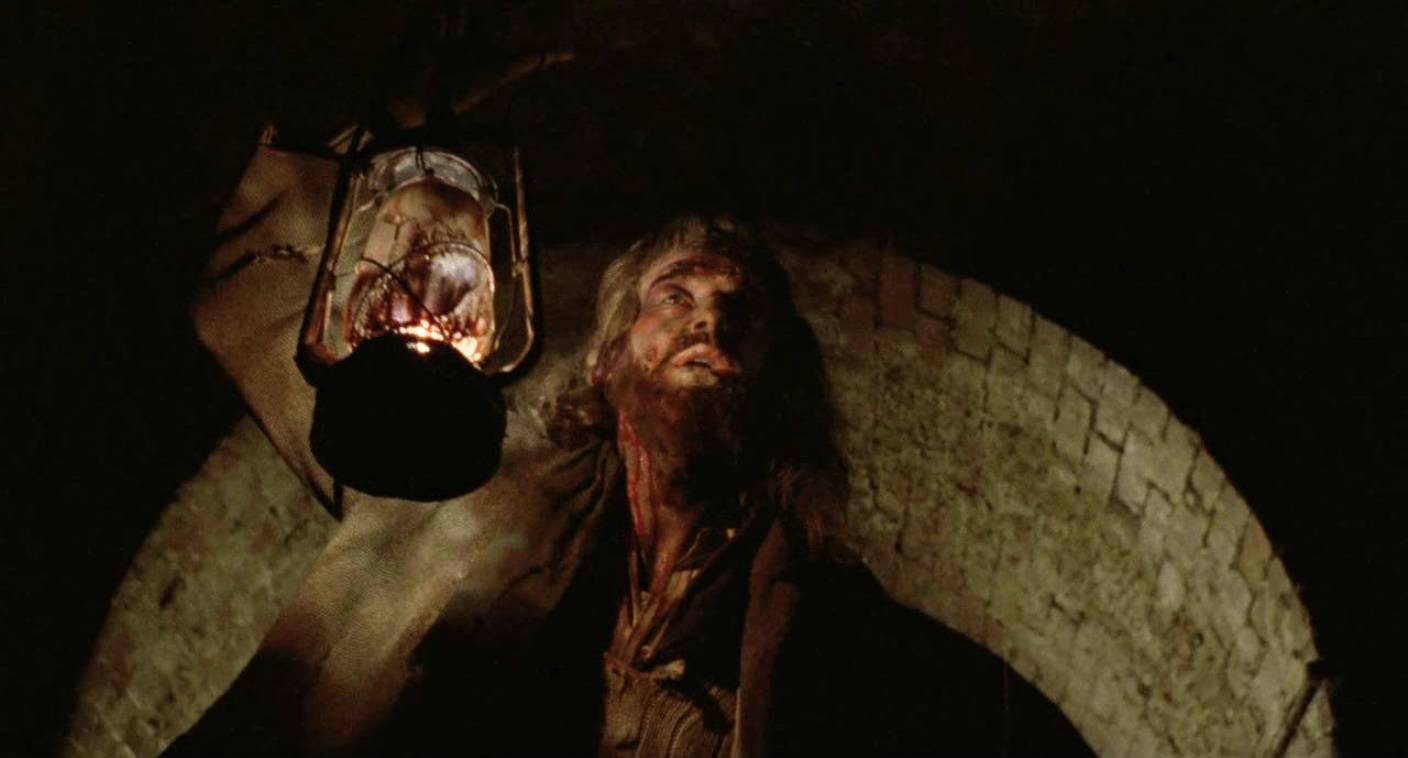
But honestly, the real start of the show, is Hugh Armstrong, simply billed as “The Man”. This is also where the sadness of the story comes in, because since he was born into his environment, he doesn’t know any better. It is him, along with his dying companions, just trying to survive how they always have been. With no real dialogue, other than a lot of non-sensical gibberish, he still is able to emote plenty of emotions. You really feel for him, even though at times he does become a monster.
Fun bit of trivial told from director Gary Sherman on the commentary track was that the “man” character was almost played by none other than Marlon Brando, who wanted to do role pretty much uncredited, but he had to back out. He had to fly back home to the states because his son was ill. None the less, Armstrong does a fantastic job here.
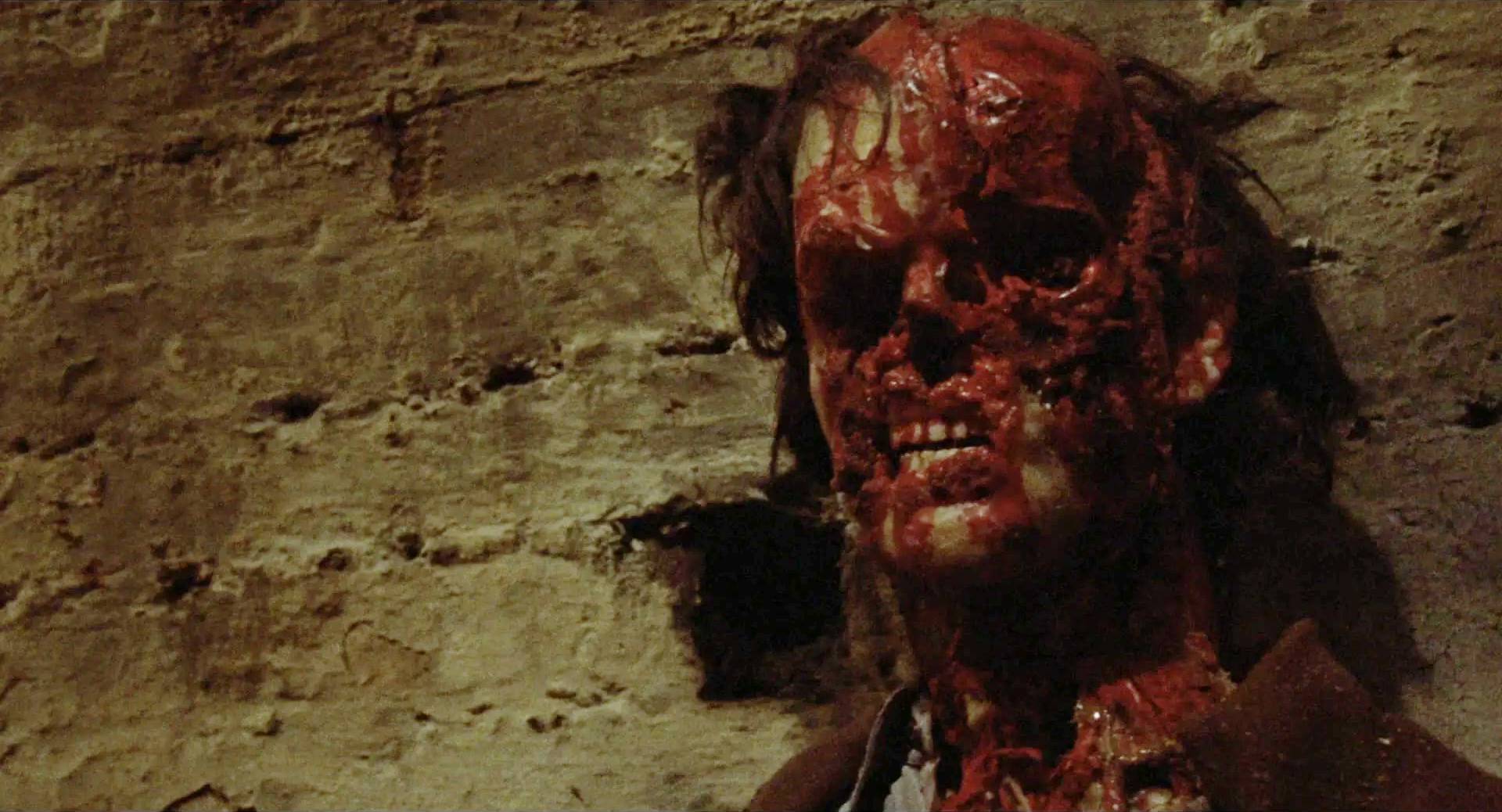
The makeup was done by a father and son team, Harry and Peter Frampton. No, not the musician. Harry worked on films like The Shuttered Room (1967), Amicus’ The House that Dripped Blood (1971), and Norman J. Warren’s Prey (1977). Then with his son, they worked on I, Monster and Straw Dogs, both in 1971, and then on Hitchcock’s Frenzy (1972). Peter would share a BAFTA award with Rick Baker, Paul Engelen, and Joan Hills for Greystoke: The Legend of Tarzan, Lord of the Jungle (1984), but then would go on to win an Oscar for Braveheart (1995). Not sure if it is because of the recent 4K release, but the close up of the corpses, as well as our main “man”, the makeup looks fantastic. Very red, wet, and very detailed. You can almost smell the environment!
Released in 4K by Blue Underground, this looks absolutely fantastic. The print is crisp and clean, even in the darker shots in the Underground. Some maybe a little TOO clear, when you see the different remains down there! This release has 2 different audio commentaries, the first one being brought over from the Blu-ray release, which includes director Sherman, producer Maslansky, and Assistant Director Lewis More O’Ferrall. It may not be new, but it is chocked full of trivia and great stories. From the production aspects, the actors and working with them, to even some good details on the incredible 7-minute pan shot early on in the film. It is one that always gets my attention when watching it and never ceases to amaze me. But there is also a great story from Sherman, of writing a fake screenplay, just to get permission to shoot some scenes for his real film!

The second commentary is by film scholars Troy Howarth and Nathaniel Thompson, which like in all their commentaries have so much information to tell us about everything else in between. Always informative and still entertaining to listen to.
There is also a great interview with Sherman, and executive producers Jay Kanter and Alan Ladd Jr. It’s a fun interview with them reminiscing and laughing about the production. There are other interviews with star producer Paul Maslansky, and actors David Ladd and Hugh Armstrong.
Not only do we get to see this great film in the best looking it ever has, it shows how much of a talented director Sherman was on his first feature film, as well as having such a talented cast and crew, that really created an effective horror tale, but also giving it much more heart and soul than you’d expect about a cannibal living in the underground train system in England.
 kitleyskrypt.com