

(1954)
Directed by Wyott Ordung
Starring Anne Kimbell, Stuart Wade, Dick Pinner, Wyott Ordung, Inez Palange,
Jonathan Haze, David Garcia, Roger Corman
While this isn’t directed by Roger Corman, it is his first film as sole producer, and it was really a sign of things to come. While a lot of Corman’s earlier work might have involved cheesy monsters here and there, they were still entertaining. Watching them now, it gives me that nostalgic feeling of watching these as a kid, catching them on TV some Saturday afternoon. But watching them now, as an adult and a life-long student of movies, while I still get that same feeling as a kid, it also makes me appreciate the people involved a lot more. And Monster is a perfect example of that.
The story is about a young woman named Julie, played by Anne Kimbell, an artist vacationing in Mexico. While sketching on the beach one day, she learns of a local legend from a local boy, a sea monster that lives in the water, who happened to take his father. Or so he says, because who would believe in a sea monster. But the locals . . . they believe. She soon meets up with marine biologist Steve, played by Stuart Wade, as he’s tooling around in his little mini submarine. They become quick friends and more. When she tells him and his partner Dr. Baldwin, played by Dick Pinner, who are out studying marine life in the area, about the legendary sea monster, they scoff at her because things like that just don’t exist.
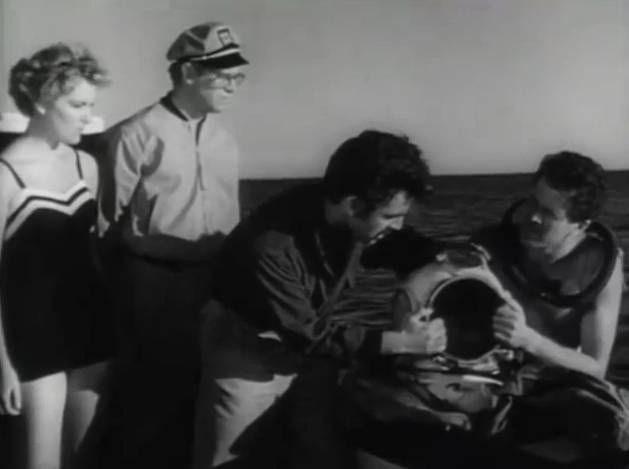
But just then, another boat shows up with the driver saying his brother is stuck down in the water and needs help. Steve jumps in his trusty mini-sub and goes down to bring back and diver suit, completely empty, even though it is still sealed and attached together. This just reenforces Julie’s ideas of the sea monster. As Julie does more research about the history of the island, she finally gets glimpse of this “devil that lives in the cove”, but will she survive before Steve and Dr. Baldwin return to the area to help her?
One of the great things about this film is the history of those working on it. Actor Jonathan Haze makes his acting debut here, who would go on to become a staple in Corman’s films, most notably playing Seymour Krelborn in The Little Shop of Horrors (1960). We actually get to see Roger himself in the film as one of the boat’s crew, only having a line or two. Also in the film is the director himself, Wyott Ordung, playing Pablo, one of the locals who tells Julie about the legend of the monster. Ordung had quite the career, not in scope but of the few films he was involved with. He was the assistant director on low budget gems like The Navy vs. the Night Monsters (1966) and The Mummy and Curse of the Jackals (1969). But he also wrote the screen play for the sci-fi epic Robot Monster (1953), though he probably doesn’t want that credit, I know I’d wear that with pride!
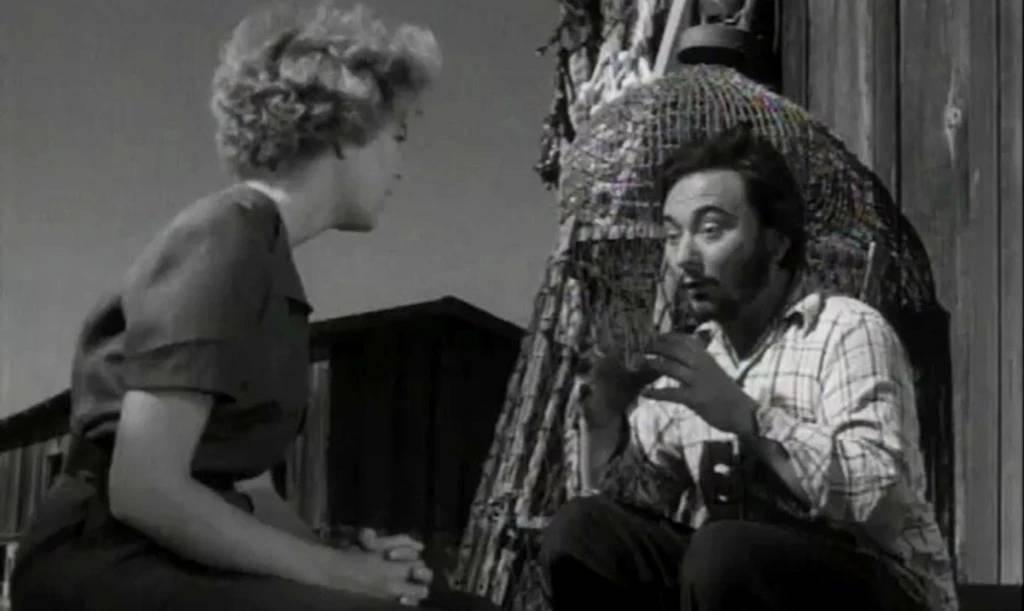
To show just how brilliant and crafty Corman was even in the beginning of his career, he had read about this one-man submarine in the paper that was made by a company called Aerojet General. He called them up and asked if he could use it in his film, for free of course, but telling them it would give them free publicity, which they happily agreed!
Then we have Floyd Crosby as the cinematographer. How he got working with Corman in the low budget world is beyond me, especially since he won an Oscar in 1931 for Best Cinematography for the film Tabu: A Story of the South Seas, directed by F.W. Murnau! He would also win a Golden Globe for Best Cinematography for High Noon (1952). He started working with Corman on Monster, continuing to work many more times with him into the ‘60s, working on films like The Fast and the Furious (1954), The Beast with a Million Eyes (1955), Attack of the Crab Monsters (1957), House of Usher (1960), The Pit and the Pendulum (1961), and more. Oh yeah, he was also the father of musician David Crosby!
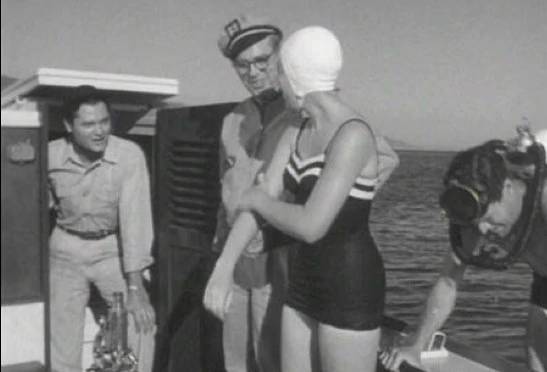
Monster from the Ocean Floor has recently been released on Blu-Ray from Film Masters, and they have once again just knocked it out of the park. This is a newly restored 4K scan from the original 35mm camera negative and is the best I’ve ever seen it. A lot of these earlier films from that era never had been given a lot of care when they would get transferred to those early VHS releases, usually looking blurry, or just plain poor quality. But this new release just looks amazing.
Also once again, one of the things that Film Masters does that is so special is putting the spotlight on subjects that might be missed in other releases. For this one, it is a little featurette on Bob Baker, who created and animated the titular creature here. A lot of people might not know Baker’s name, but I bet they know some of his work. Baker was a marionette puppeteer that started creating and performing his own puppet shows at the age of 10. He would eventually open up the Bob Baker Marionette Theater in Los Angeles, which not only is still there, but it is still running, even after Baker’s death in 2014. His influence is overwhelming, especially when you see the sheer talent he had, not only in the creation of his puppets, but in making them come to life. Not only did he create and animate the giant octopus in Monster, but he also animated the rat-bat creature from The Angry Red Planet (1959), which is one of the things that makes that film so memorable! He was also the one animating the tall, skinny alien from Spielberg’s Close Encounters of the Third Kind (1977). Bob Baker: From Monsters to Marionettes features an interview author Justin Humphreys about Baker’s career, which I just found fascinating and entertaining. I know I’ve seen this man’s work before, but just never knew of the man behind the puppets. Until now. Check out the theater’s website HERE.
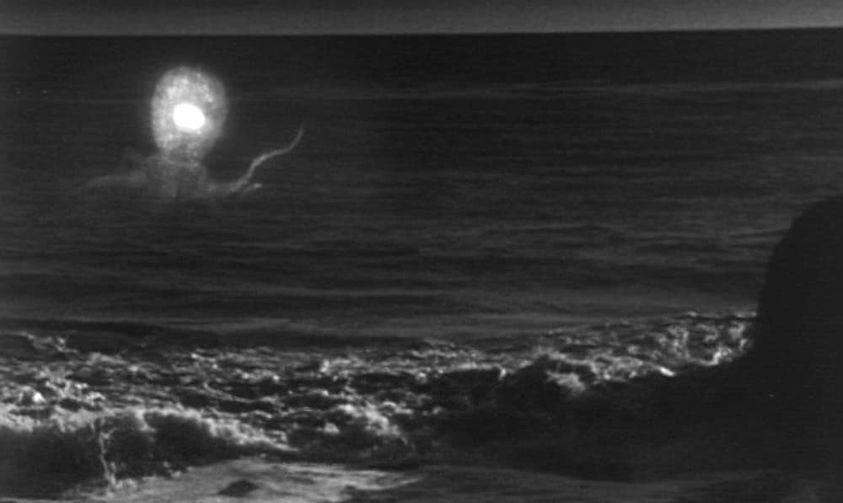
The release also has a short archival interview with Roger Corman, that no matter how many times you see Corman talking about his older movies, it is always fun to watch. Plus, there is an audio commentary with film historian Tom Weaver, with bits from Corman himself on the disc. The thing about Weaver’s commentaries is that they are like listening to a lecture about the film. He packs in so much information about the film itself, as well as the people involved. Highly informative.
Once again, Film Masters does an exceptional job saving some of these low budget films that most critics wouldn’t even spend time watching let alone going through all the work in making them look their best. So, from us fans of these types of pictures, we thank you, Film Masters! Keep it up!
 kitleyskrypt.com