
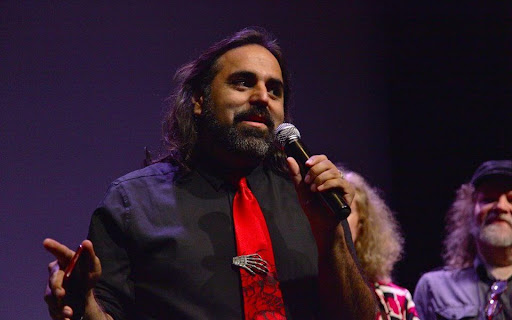
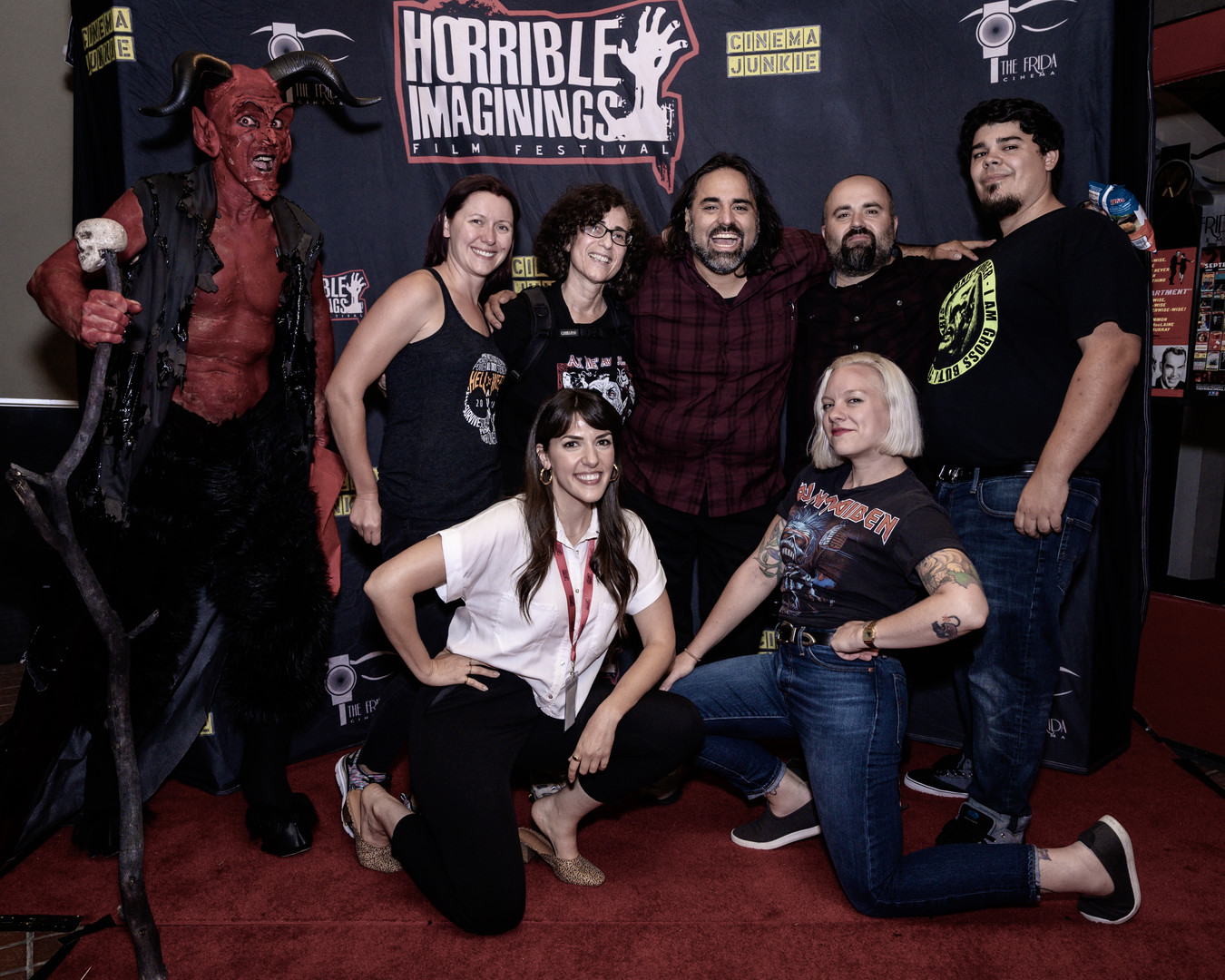
Miguel Rodriguez, one of the co-founders of the Horrible Imaginings Film Festival, is just like us, a very passionate fan of horror cinema. In fact, so much so that he started this film fest to help highlight films that he felt needed more attention. And has been doing so since 2009. So we decided to take a few minutes before this year’s festival started and pick his brain about the genre and what makes it so special to him.
Kitley’s Krypt: Let’s start at the beginning. How long have you been a fan of the horror genre, and what does it mean to you being a serious follower?

Miguel Rodriguez: Horror grew up with me. Most people say they grew up with horror, but I feel like we grew up together. My grandmother used to tell me extremely terrifying stories growing up, as did others in my family. She loved scary movies, and we would often watch them together. We didn’t speak easily because of language barriers (I was not taught Spanish growing up), but horror movies were a way to relate.
As far as what it means to me to be a serious follower, that can be a bit challenging. It is funny to try to answer this question now, because I was just having a discussion with some friends who were talking about relationships, and they were complaining about people who needed to have all the same pop culture loves as their partners. I found it interesting and nodded with a lot of their points about two people loving all the same things being boring, and people having their own personalities. The thing I had to realize for myself, though, was that an understanding and love for horror is so integral to my worldview that any partner of mine would HAVE to share it.
Horror is so personal. It is a specific exploration of emotions that are, at their core, uncomfortable, challenging, taboo, or transgressive. Some people have personalities that feed off of the freedom to express and explore those emotions. Other people find it distasteful at best or dangerous at worst. It is a genre that is stigmatized to the point that people who love it constantly complain about the lack of mainstream respect it gets, yet I do believe it derives a lot of its power from the very things that create the stigma. I find myself considering and living this strained reconciliation on an almost daily basis. I’m pretty fine with being an outsider, so long as we can all help each other thrive.
Kitley’s Krypt: I hate asking people their absolute favorite film because it is such a limitless question, but what would be some titles that had a significant impact on your life? And feel free to go into details on why they did if you wish.
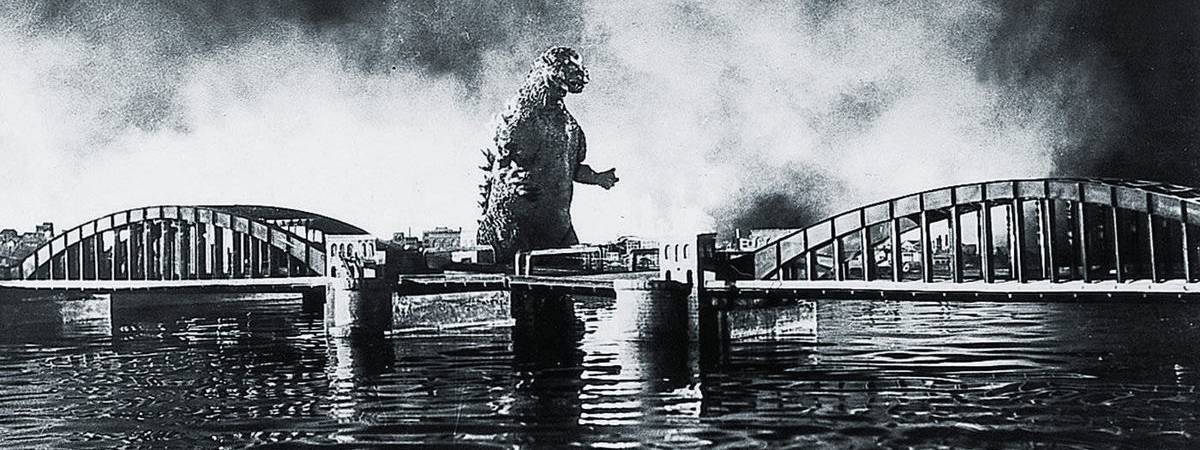
Miguel Rodriguez: Ha! I used to HATE getting asked this, but now I can just answer with the book My Favorite Horror Movie, which I contributed to a couple of years back. It has three editions now, but I’m in the first. The film I wrote about was the original Japanese 1954 version of Gojira (Godzilla). I will be happy if anyone decides to seek out the essay I wrote, but I will say that Gojira is like The Little Prince for me. Saint-Exupery’s book is so filled with layers of meaning that a person can get a different sense of it at each stage of their life. I love looking for stories that use a genre lens to disclose real-world fears. At Horrible Imaginings, we call films that do this explicitly our Horror for Humanity titles. To me, Gojira is a Horror for Humanity title.
Kitley’s Krypt: You are the founder and Executive Director of Horrible Imaginings Film Festival, which takes place in Santa Ana, CA. What made you decide that you needed to start this?
Miguel Rodriguez: Horrible Imaginings started in San Diego in 2009. I have done film festival work and programming work in the past, but this is the first film festival that I founded and directed. The reason for starting it was simple–there wasn’t a film festival in San Diego dedicated to genre work. I moved to San Diego from Baltimore in the same year I conceived this film festival. I had no friends and very little creative stimulation. In the effort to connect with people, I started a podcast that I called Monster Island Resort. Had there been a horror film festival in the city at the time, I would have likely been satisfied with volunteering for them, perhaps eventually working for them. There wasn’t, so I started one. That decision wasn’t too difficult, but figuring out what I really wanted the festival to be was extremely difficult.
Kitley’s Krypt: On the film fest’s website, your mission statement says it is “to spotlight genre cinema, amplify artistic voices, and foster a community of acceptance.” First of all, BRAVO for that! You seem to hit all the right points in that one statement. But let’s discuss this a little further. Why do you feel it is important to “amplify” these voices?
Miguel Rodriguez: It is probably more quixotic than ever today to attempt this amplification of voices because of the sheer number of films being made every month of every year. Ultimately, film festivals are a curatorial effort.
Kitley’s Krypt: Why is it so important for that community of acceptance?
Miguel Rodriguez: I will kind of go back to my answer for the first question. That idea of horror being a personal expression of fears. Let’s take some familiar arguments among horror fans: Was *film a* scary? Was *film b* more scary? Was *film c* even a horror film? Some iteration of questions like this happen with startling frequency any time a horror/thriller/suspense/scifi/whatever film achieves any level of hype. These questions are also symptoms of how personal horror is. What scares you or me or some person in Tasmania is central to the core of who we are and the experiences that shaped who we have become.
What I like to do is, instead of saying, “this wasn’t scary,” say “what fears was the filmmaker expressing?” “Was it scary for you and why?” “Was it not scary for you and why?” “What makes it scary for you and not you?” I find that the comparing and contrasting of experiences that lead to varying reactions of films can highlight the similarities between myself and others, as well as enlighten me about experiences that I might not have had. I find this, and horror, to be a tool for building empathy.
Kitley’s Krypt: One of the things I’m always promoting on my site is to not limit yourself on what you’re watching, to make sure you explore horror films from different decades to different countries. Going through this year’s lineup, we can see a wide variety of countries being represented. Why do you think it is important to see films from around the world? What does it offer the viewer different than what they would normally see?
Miguel Rodriguez: I love that you use your site for that. We do A LOT of repertory screenings for this reason. I grew up with a steady diet of horror films, that is true, but I also grew up with a steady diet of classic and international film. Turner Classic Movies was a mainstay in my house since its lights went on in 1994. The exploration of classic film and comparing and contrasting cultural zeitgeists over time is similar to my answer from above about comparing and contrasting personal experiences.
Your question about the importance of international cinema is deceptively complex. On one level, my answer is the same compare/contrast model as the others, involving different cultures or nations. Let’s go back to Gojira, which I sparsely wrote about in your earlier question. This is a clear example because we have both a Japanese version (which wasn’t shown theatrically in the USA until 2005, 50 years after its original release in Japan), and a version re-cut for the US in 1955 entitled Godzilla: King of the Monsters. The difference between both cuts is so stark because of the time in which they were made, and that difference goes beyond merely cramming in scenes with Raymond Burr. The Japanese perspective of the atomic and hydrogen bombs was largely excised from the American cut. My obsession with Godzilla as a child led to my watching films like Children of Hiroshima and discovering master filmmaker Kaneto Shindo, who also directed horror classics like Onibaba and Kuroneko.
On another level, international cinema can give us in the states something that independent cinema can, and that is narrative storytelling that breaks from a familiar Hollywood formula. And on an even further level, personally, I use cinema as a way to transport myself from the banality of everyday life. Films from other countries can feel like genuine transportation. I have whiled away many of my years watching cinema from around the world. This is a pretty easy task these days, but it used to be much harder. Many films could only be found bootlegged with no subtitles. When it comes to genre international cinema, it is wonderful how much one can glean from image and sound alone.
Kitley’s Krypt: You’ve been running this film fest since 2009. What would be some of the standout titles that you’ve screened over those years?
Miguel Rodriguez: I will stick to the main fall festival since this list could get VERY long!
Indie: Dead Hooker in a Trunk, Long Pigs, The Taint, Zero Killed, Gut, Styria, Soulmate, Call Girl of Cthulhu, Caedes, Mexico Barbaro, You’re Killing Me, Alena, TAG, Beyond the Gates, The Greasy Strangler, Sendero. Idyll, Happy Hunting, B&B, In the Dark, Three Dead Trick Or Treaters, Midnighters, Red Christmas, The Returning, Deseo Deseo, The Ranger, Bong of the Living Dead, Vampire Clay, Snowflake, Satanic Panic, Swing Low, Reborn, Porno, Antrum, The Deadliest Film Ever Made, Luz: The Flower of Evil, Diablo Rojo, Repossession, Darkness in Tenement 45, The Brain that Wouldn’t Die (indie remake).
Kitley’s Krypt: What would be some titles that you’ve screened that you feel still need more attention?
Miguel Rodriguez: All of them, but I will mention a few here:
Features: Mauricio Chernovetsky’s STYRIA.
Midnighters got released by IFC, but I think it is a solid film that never gets talked about. Alex Essoe is super good in it.
Swing Low (which got retitled Ravage, but I refuse to use it) is a nasty revenge film with some pretty extreme moments. It got some incredible visceral reactions from the theater audience.
Short films:
These two are rare short films that are super long in length, but were exceptional enough for us to show them. I love them both.
Bunny by Adam Awni
Little Boy Blue by Nathan Keene
Kitley’s Krypt: Thanks Miguel for taking the time to chat with us. For those interested in the Horrible Imaginings Film Fest, it starts tomorrow on Sept. 2nd and runs through Sunday, Sept. 5th. They once again have a huge selection of features and shorts and special programming for you to check out. Head over to their website HERE for all the details.
 kitleyskrypt.com