

(1964)
Directed by Kaneto Shindo
Starring Nobuko Otowa, Jitsuko Yoshimura, Kei Sato, Taiji Tonoyama
Back in the days before the internet, horror reference books are where we learned about older movies. For me, Phil Hardy’s Encyclopedia of Horror (the title of the first version of the book I had) was very key into helping me discover a wide variety of titles from around the world. There was a shot from this movie in there, of a woman wearing a demon mask, with grinning mouth and wide eyes, that immediately made me want to know more about it. Eventually I would track down a copy and then understood why it was praised so much. When you are talking about classic Japanese horror cinema, this must be in the conversation.
Based on an old Japanese folktale, the story is quite simple. An older woman waits at home for her son to return from the war, along with her daughter-in-law. Since the farming is not going to well, they have come to killing wandering samurais and stealing their clothes and equipment to sell for food. They dispose of the bodies by dumping them in a large and deep hole near their straw hut. One day, a friend of the son returns home from the war … with bad news. When it looks like he is trying to take away the daughter-in-law, the mother tries to stop her.

Late one night, the woman meets up with a mysterious samurai wearing a strange demon-like mask, which she kills. She tries to remove the mask, but it is almost stuck to his face. When she finally gets it off, the face is all scared. She then comes up with a plan to scare her daughter-in-law in staying with her. When the younger woman leaves in the middle of the night for a midnight rendezvous with the young man, the old woman puts on the mask and seals her fate.
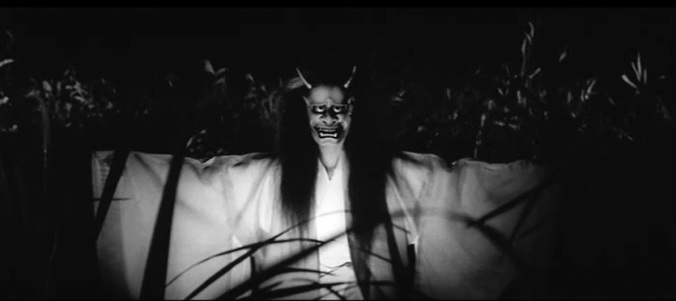
You should not expect an action pack film with tons of sword fighting action. This is a character driven story with depth much deeper than the hole they throw the corpses in. Instead, you have style, shot in beautiful black and white, in a 2.35:1 ratio. You have a setting that shows the depressing life these people were living, struggling daily just to stay alive, let alone be happy. With the shots of the blowing reeds, to the nighttime shots with the “demon lady”, the film is filled with some incredible imagery. A remarkably simple story, but an effective one. Even if you do not like reading subtitles (and if you are one of those, get over it and start enjoying some incredible cinema), the story is easy enough to understand.
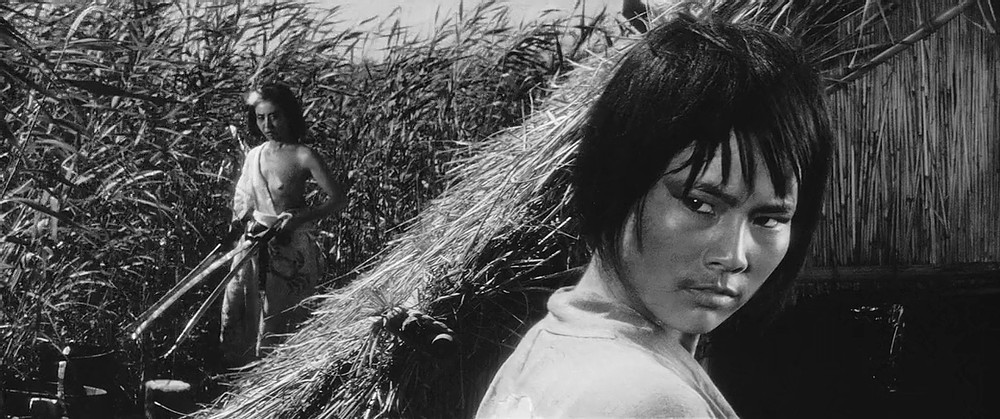
Nobuko Otowa plays the mother who just wants her son to return home and is deathly afraid of being left all alone. You can feel the agony of life in her expression and see it worsen when she starts to realize her daughter-in-law might be leaving. Jitsuko Yoshimura plays the younger woman, who just wants to escape from the trap she has found herself in, wanting just some glimpse of happiness. Kei Satô plays Hachi who disturbs the status quo. Both Otowa and Satô would appear in Kuroneko (also known as Black Cat, released in 1968) also directed by Shindô, which is another tale of ghosts and demons.
The image of the demon mask is an iconic and haunting image, which is probably why it was used throughout history in the Japanese culture. Even though it has a big smile on it, the evil is still here. Plus, being in black and white, it enhances the atmosphere, which I think would have been lost had it been shot in color. It is probably why the mask is so often used in promotion of it because it immediately grabs your attention and draws you in.
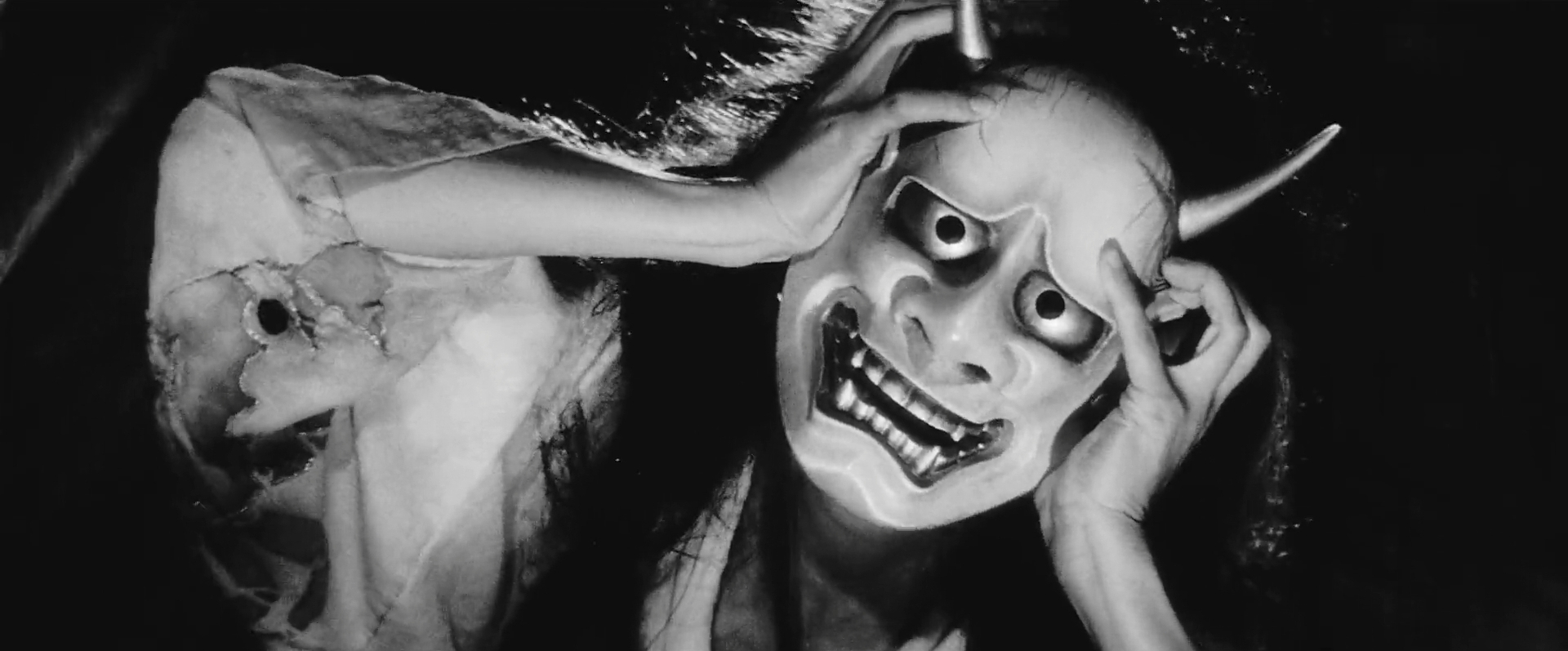
There are a few essential Japanese horror films, such as the anthology film Kwaidan, also released in 1964, but Onibaba needs to be part of your horror history lesson if you have not taken that journey yet. You will not regret it. Just do not put on the mask.
 kitleyskrypt.com