
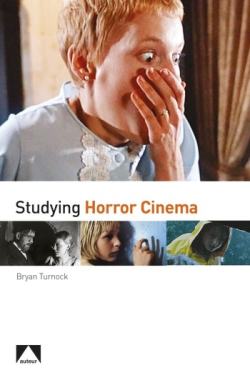
 Studying Horror Cinema
Published by Auteur, 2019. 300 pages.
By Bryan Turnock
This took me much longer to get through than I originally had hoped. Not that it was a hard read, but because I started reading it in November of last year, right before the holidays started to set in. But I’m glad I stuck to it because it makes a great book to start the new year out on!
For anybody who is interested in learning more about the horror genre, the best way to do that is watch the movies. Not just new ones, but the old ones too. Besides the actual viewing though, reading about them as well can do wonders on how you look at the films and the effects they have. Not to mention maybe suggesting titles that you haven’t seen before. This isn’t to say you can’t form your own opinions and thoughts, but one of the beauties of your “horror education” is when you read of others opinions, not only to you compare it to your own, but help you think of different things that you might not have otherwise. And Bryan Turnock’s book is exceptional example of this.
The intro of the book, which I actually found the most enjoyable part, actually taking pages of notes from it, talks about defining the genre, as well as going different film theories that I found quite interesting. There’s a quote from Thomas Sipos, about using the stories of Dracula, Frankenstein, and Dr. Jekyll & Mr. Hyde to define the horror cinema’s three sub-genres, the supernatural, the monsters of nature and science, and the human psyches dark side. Again, while you may or may not agree with the thoughts in here, it will give you something to think about, and that is the beauty of continuing your horror education.
Turnock uses many different sources throughout the book, giving different viewpoints and examples explaining his ideas and the different subjects. After the introduction, we start at the beginning with the early European influences, such as the German expressionism, moving to the American and English gothic styles. We go through modern horror, Asian horror, the slashers, body horror, and all the other important topics. At the beginning of each chapter, there is a list of a few recommended titles for the reader, almost like a study guide. I would recommend seeing all the films they listed throughout the different chapters!
Sure, maybe I really enjoyed this book because Turnock talks about what defines a horror movie that pretty much equals to what I have been preaching, stating “a horror film can be identified from the effect that the film as a whole is intended to have on the viewer”. He goes on to say “any film that sets out with the objective of provoking fearful emotions can be described as a horror film, regardless of plot, characters, setting, or anything else”. So there you go.
If you love reading about the history of the genre, how it has progressed, been influenced, and mutates, then I would highly recommend this book. Very easy to read, makes several great points, and will keep you thinking and wanting to learn more.
 kitleyskrypt.com